When you hear the term Reconstruction, you might think of rebuilding. Thus, you might assume that the Reconstruction period was the period that the federal government spent rebuilding any infrastructure that was destroyed during the war. And while this was true to an extent, Reconstruction was not just about rebuilding the South – it was about changing it demographically, politically, and culturally, forever, to ensure permanent Republican dominance over the country. As you can probably tell, that plan didn’t work.
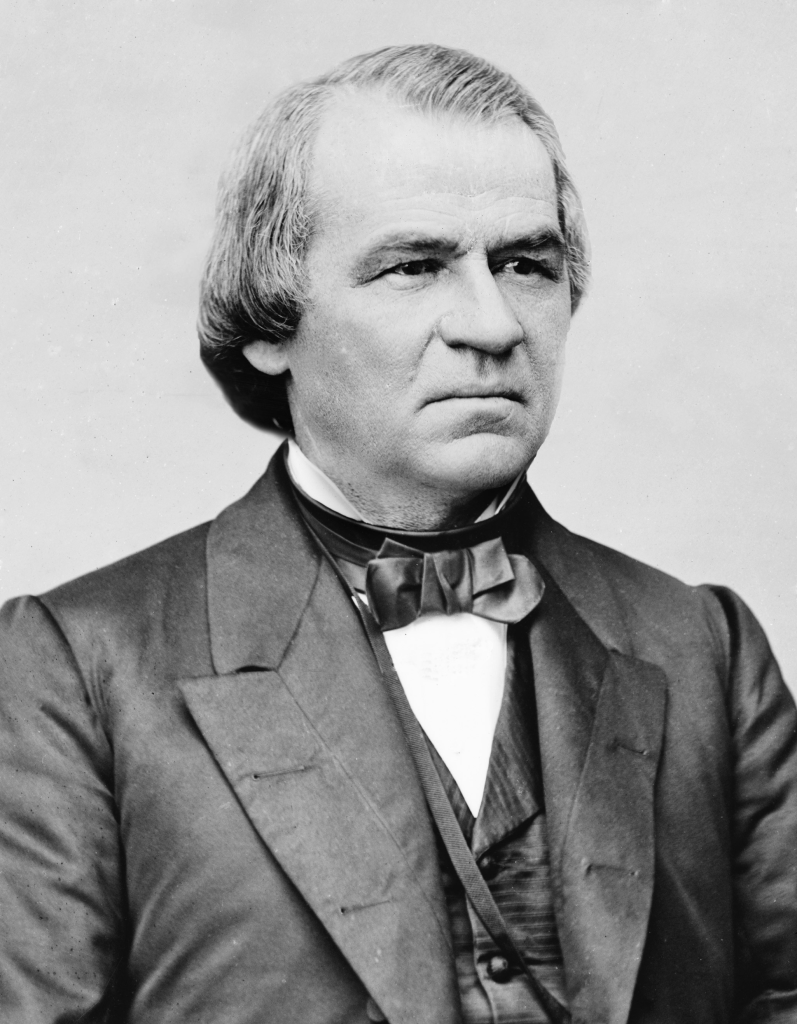
Andrew Johnson Administration & The Radical Republican Congress
When Lincoln was assassinated, Vice President Andrew Johnson took office and aimed to fulfill the moderate wishes of the now-deceased President, yet he was repeatedly stalled by a small faction of the Republican Party covered previously, the Radicals. Seeing enough was enough, Johnson went on nationwide rallies in 1866 to drum up support for Reconstruction policies, going on meaningless rants, comparing himself to Jesus, and publicly clashing with Republican hecklers. The press had a field day, and Johnson did exactly the opposite of what he wanted to by tilting public support in the opposite direction and leading to the Radical Republicans gaining a 2/3ths majority in Congress, which was enough to override the President’s vetoes and do whatever they wanted, meaning that the President was completely powerless. Congress told Johnson that his job was to execute the laws that they showed him, and if he didn’t, they would do it anyways. Johnson’s administration would focus on foreign policy for the rest of his term, successfully purchasing Alaska, unsuccessfully purchasing Santo Domingo, and pressuring France to withdraw from Mexico.
Congress placed the South back under military rule because they feared that under current conditions, old Southern politicians would rise back to power and reinstitute slavery or reignite rebellion. The South was divided into five districts, each governed by a general, with the overall leader being General Ulysses S. Grant, a firm Radical Republican loyalist. Under Grant’s rule, the Freedmen’s Bureau was established, preparing freed slaves for their new life and explicitly teaching them to vote Republican for the rest of their lives, securing the Black vote for the next century and providing a pathway to carry Grant and future Republicans to the presidency (Grant would win a minority of the white vote but would only win because of the extra Black votes.)
The fact that Blacks who were specifically taught to vote Republican were given the right to vote while many Southern whites who joined the Confederate Army and fought for their country were being politically disenfranchised saw many in the South to consider newly “elected” governments in the Deep South illegitimate. While the purpose of these measures was to prevent a Southern resurgence, it actually did the opposite because it inspired Southern resistance to the extremely one-sided and often incompetent government under which Northerners came to the South to make a profit off of the war-torn land and the cheap labor of Southern whites and newly freed slaves; so basically, newly freed slaves who were taught to vote Republican were allowed and encouraged to vote, while whites who could make actual decisions based on critical thinking were disenfranchised and not encouraged to vote, leading to a government that exploited both populations for their own gain. Southern whites blamed the Freedmen for electing this oppressive government despite the fact that the Freedmen were simply were doing what they had been taught, and thus the Klu Klux Klan was formed as a terror and insurgency group to target the Freedmen, seen as the base of support for the oppressive Radical government, leaving the Freedmen between a rock and a hard place and ultimately increasing North-South tensions, just as Lincoln had warned the Radicals before his death, yet the Radicals had refused to listen to their leader and prioritized revenge over national unity, leading to this complete mess.
Now, the Radical Republicans had one major hindrance to their agenda – President Andrew Johnson, one of the last Moderate voices in the country. Expecting Johnson to fire Secretary of War Edwin Stanton, one of the Radicals’ last allies within the administration, they passed an absolutely ridiculous and unconstitutional law saying that a President cannot fire a Cabinet member, Johnson vetoed it, Congress overrode Johnson’s veto as the Radicals held a 2/3th majority, Johnson decided to fire Stanton anyways, Congress claimed that Johnson had violated the law and began impeachment proceedings, ultimately leading to Johnson being acquitted in the Senate with 35 voting to convict him, just one vote short of what was needed of removal, and the Supreme Court ultimately decided the law was unconstitutional anyways (which it very clearly was), meaning that the whole thing never actually should have happened. However, as the country wanted populist revenge rather than national unity, Johnson was incredibly unpopular and decided not to run for re-election, and the American people, in part because of the Freedmen who were taught to vote Republican, decided to vote the incredibly popular General Ulysses S. Grant, a person with no prior experience in business or politics, to the office of the presidency; Grant was the figurehead of the Radical Republican movement, and with the executive now under the Radicals’ control, all hell was about to break loose.
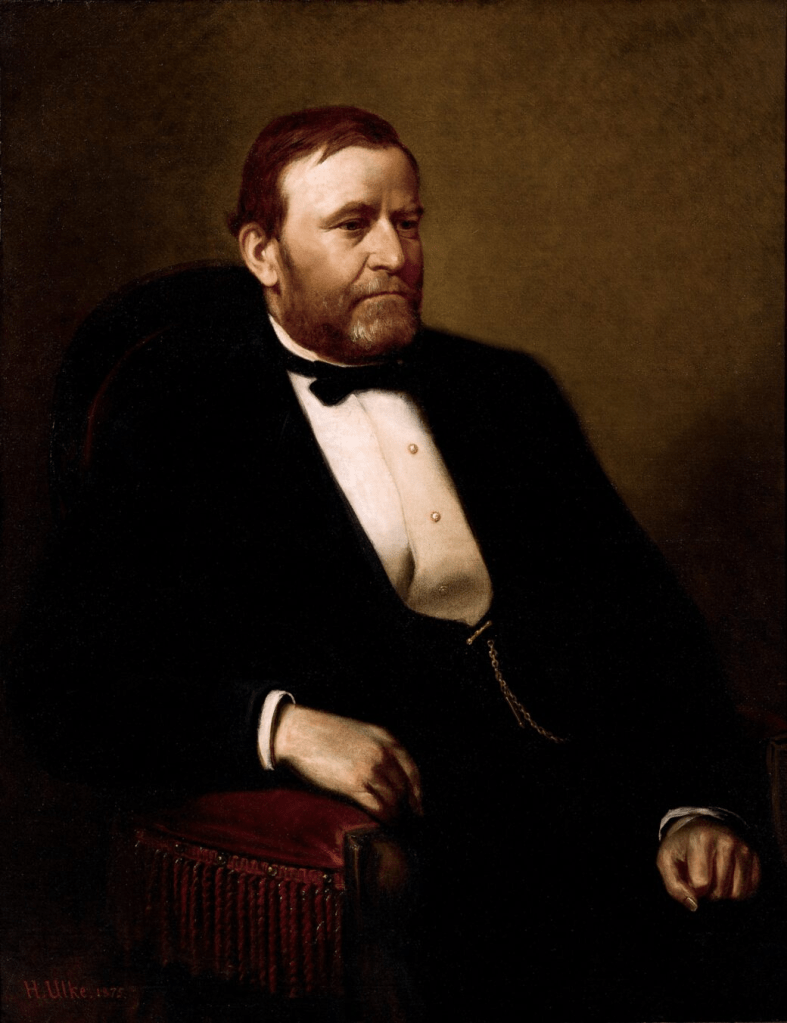
Ulysses S. Grant Administration
In just the 8 years of Grant’s term, the Republican Party became closely tied to businesses and industries specifically in the North; both Republican and Democratic politicians became increasingly corrupt and began using backdoor deals to increase their wealth and help their chances of winning elections; government secrets were being sold to any speculators that wanted to know where the economy was going; the Monetary Reserve was plundered due to Grant’s policy of “hard money”, despite the fact that the debt had multiplied 40 times since the Civil War began; the South was being sold off to rich businessmen (nicknamed “Carpetbaggers” by white Southerners) who only won their elections because of the Black vote, which only went for them because the Freedmen’s Bureau taught them to vote Republican; and instead of doing anything about this rampant corruption, the members of Grant’s administration, most of them being friends and family members of Grant himself, each had their own corruption scandals that they were each embroiled in, and when these scandals became public, Grant spent all of his entire attention protecting them from the punishment of their crimes. Now, the argument that some historians make is that Grant was simply a poor, naive guy that was just too gullible and inexperienced, and it wasn’t his fault that he appointed them. Well, (a), it’s still his fault even if he wasn’t involved in the corruption, and (b), do you really think that Grant, the same President who appointed his own family and friends to the administration, who made and profited off of corrupt deals, sold sensitive financial information to speculators, pushed agendas that other individuals bribed them for, and attempted to cover it up, and who, again, Grant actively worked to protect them from the consequences of this corruption, wasn’t involved in some personal corruption himself? That’s very hard to believe, and yet many historians do so.
Now, apart from corruption, Grant’s presidency was also plagued by another issue: Native Americans. Back, during the Civil War, the Native Americans, who practiced slavery themselves, generally chose to side with the Confederacy, which turned out to not be the best move. Lincoln argued that because the Natives chose to rebel, they violated the treaties that they signed with Jackson where the Natives basically agreed to move to reservations, and in exchange they could do whatever they want in those areas. Lincoln’s treatment was the same as toward the South: he would pardon them of their crimes, and in exchange, they would swear their loyalty to the Union and abolish slavery. Yet, when the Radicals took charge, they started violating those treaties, reducing the land that the tribes held, moving both Indians and non-Indians to the land. Eventually, the Indian Territory would be abolished and replaced with the state of Oklahoma. The government would end Jackson’s policy of signing treaties with the Natives and restore Washington’s policies of assimilating them through force, ending their status as, essentially their own countries. The Native Americans perceived assimilation as an attempt to destroy their culture, which it probably was, and refused these policies. This sparked a series of wars over the next two decades that the Americans would ultimately win and assimilate into American culture, which, indeed, turned out to destroy their own cultures almost entirely.
Grant would also readmit the remaining states back into the Union and restore voting rights to former Confederates in 1872. With this, the Republicans slowly began to lose power in the South. Eventually, the Democrats were able to retake the House of Representatives in 1874 and begin investigating Grant’s corruption, while also doing everything they could to push back against Northern influence in the South.

The Election of 1876
Despite the fact that all of the former Confederate states had rejoined the Union, Grant decided to keep South Carolina, Louisiana, and Florida under military occupation. Suspiciously enough, those same three states saw major fraud occur in these states in the election of 1876. Congress set up a commission to find out who won the election in those states, but before that, both parties met and agreed to a compromise: the Republican candidate for the election, Rutherford B. Hayes, would win those three states and thus the election, but in exchange the Democrats would achieve some major policy victories. The occupation of the South by the military was to be ended, and the South would be free to deal with its Black population as it pleased (spoiler alert: they wouldn’t treat them that well), and a Southern Democrat would serve in Hayes’ cabinet. There were also two other conditions that probably would have strengthened the South’s economy that were proposed but ultimately scrapped. And with that, a new period of American history began, one not ruled by Radicals but ruled by moderates.
 History Explained
Leave a comment