Author: Pranav Kumar

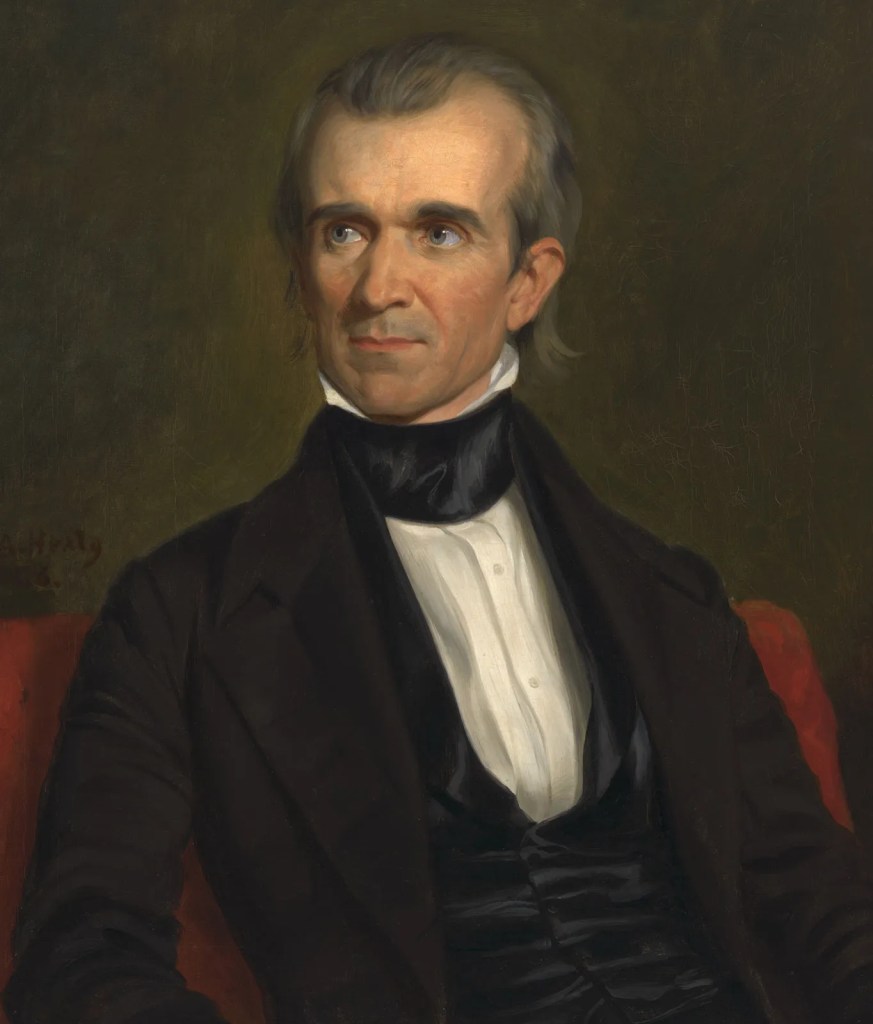
  • Andrew Jackson

    The Election of 1824

    In the election of 1824, instead of one Democratic-Republican run and win unanimously, four Democratic-Republicans ran, with each representing a different regional string of Democratic-Republicanism. John Quincy Adams, a former Federalist, would represent the Northeast; William H. Crawford would represent the mid and southeastern states, the party’s establishment; Henry Clay would represent the Western states; and General Andrew Jackson would represent the southeastern states. 

    The results of the election popular vote saw Andrew Jackson take a heavy lead with 41%, John Quincy Adams take second place with 31%, Henry Clay taking third place at 13%, and William H. Crawford coming last at 11%, and the results of the electoral map have Jackson taking a lead with 99 votes and Adams coming second with 84. However, Jackson did not get a majority of the electoral votes as was required to be president, so Congress decided the election, and with Crawford’s health very steadily and rapidly declining by this point, they picked Adams, a member of this establishment, rather than Jackson the populist outsider; however, this would not happen next election, with Jackson carrying 178 electoral votes in a landslide, compared to Adam’s 83, and with a majority of the votes, Jackson was sworn in as President.

    Andrew Jackson Biography

    Andrew Jackson’s life is the saddest and most inspiring of all of the presidents. His family was not well-established in the colonies, but had immigrated from the Irish province of Ulster. They settled in the frontier area of the border of the two Carolinas (it’s not clear which state he was born in) and were pretty poor. Jackson’s tragedies started before he was even born, with his father dying before he could ever meet him. The lack of a father made Jackson aggressive and bitter, and he would be like that for the rest of his life. 

    Jackson’s mother encouraged her three sons to fight against the British when the Revolution broke out. Andrew’s brother Hugh would join the militia but would die of having a heartstroke during the battle. Andrew and his other brother Robert would also join as couriers but would also be captured, where Andrew’s face was slashed by a British officer after refusing to work. The British would eventually release the two due to the incessant pleading of Andrew’s mother and Andrew’s age, but the horrors wouldn’t stop there.

    Now released from captivity, Andrew, Robert, and their mom would have to walk 40 miles home, with Andrew and Robert both suffering from smallpox. Robert would die of smallpox a few days later, and Andrew’s mother would die of cholera a few months later. At just 14 years old, everyone in Andrew’s immediate family was dead, and his other relatives didn’t want to take care of him because of his aforementioned aggressive and bitter character.

    It seemed that Andrew was going to become a homeless boy in the street, begging for money for the rest of his life, but he didn’t let that defeat him. He became a saddlemaker while finishing up school. He’d go to an apprentice school for law and become a very famous and respected lawyer. He would become a justice in Tennessee’s Supreme Court, help found the city of Memphis, and command the state’s militia; he was also a very wealthy and successful businessman.

    Jackson would become famous nationwide after defeating the Red Stick Indians after they massacred 500 civilians during the War of 1812, and his next major task would be to defend New Orleans from invasion by the British. He placed it under martial law, organized new regiments for Blacks and Native Americans, and collaborated with French privateers (a code word for pirates) to help defend the city from the mighty British military. It would end in a stalemate, though because the last battle of it was an American victory, many Americans remember the whole war as won.

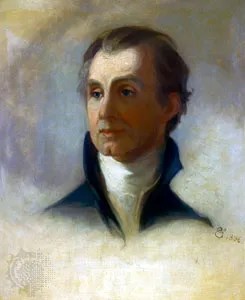
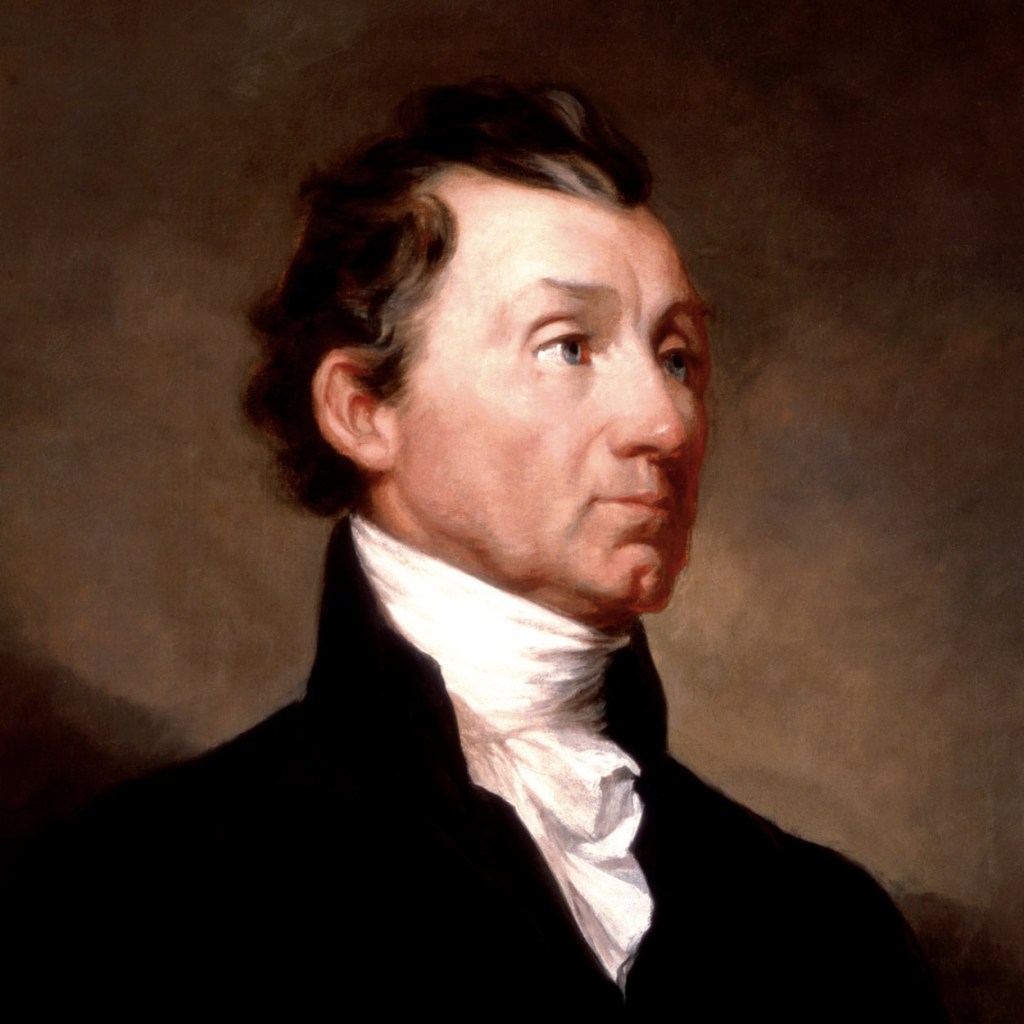
    Jackson would invade and conquer Spanish Florida for the U.S., become Florida’s first governor, and run for president in 1824. He saw the Democratic-Republican party as having grown way too corrupt and representing the ideas of the elite. He blamed Monroe for allowing such corruption to foster within the party, destroying the original values of Democratic-Republicanism Jefferson had outlined. According to Jackson, the party was filled with corrupt elitists and nepotists, with anyone who challenged the elite’s rule being quickly outcasted. The government was full of politicians who cared about themselves, and Jackson promised to change that. 

    One of Jackson’s key pillars was his democratization. All free white men should be able to vote, the state should have independence, but the country must be first, the President should have more authority than Congress, which was the figurehead of the elite, and all members of all three branches of government should be elected based on popular vote. The individual must be totally loyal to his party, and the state must be totally loyal to the federal government. Loyalty in general was another one of Jackson’s pillars. It often decided how he felt about a certain group or individual, and whether they should deserve rights or not. Another pillar was principles. Everyone must do everything by their principles, and for Jackson, this principle was to put the country first at all times. Anyone who did not abide by this principle was fired and even threatened with death.

    In the election of 1824, Jackson was extremely popular and won more votes, both through popular vote and the electoral college. However, because there were so many candidates running at once, Jackson could not get a majority, and thus the election went to Congress, who, because Jackson was not part of the corrupt political establishment, voted for Adams instead. Essentially, the corrupt and elitist members of Congress threw away the man whom the people had voted for so that they could still cling on to their power, exactly the kind of corruption that Jackson had warned about his whole campaign. Jackson was so mad that he said, “If I live, I’ll bring that scoundrel [Henry Clay, Speaker of the House] to the block [hang him.]”

    He returned home very mad, but he was nominated to run for President almost right after in October 1825. The people would stand behind Jackson, doing everything they can to tarnish the reputation of the corrupt party and call out every mistake of the illegitimate rule of John Quincy Adams. Of course, the pro-Democratic Republican media would fight back, accusing Jackson of murder and cannibalism. For the murder, he did duel with an expert marksman after he insulted his wife. Jackson was shot first, but then he shot the marksman twice, killing him. The second shot was because his gun jammed the first time, which was illegal at the time, but dueling in general was illegal at the time in Tennessee; Jackson never went to court for this. The cannibalism thing was just completely made up; there’s no evidence to prove it at all. The media then crossed a line which should not have been crossed, attacking Jackson’s wife, which would give her tremendous stress and later kill her, something which made Jackson very, very, very, (1 million times later), very, mad and bloodthirsty for revenge.

    Andrew Jackson Administration

    Jackson overcame these media accusations and won the highest voter turnout up to that point, double the turnout of Thomas Jefferson all those years ago. He was truly the “People’s President.” After his inauguration, he hosted a huge party with all of his supporters to show to the elite how popular he was, but the next day, he got straight into action.

    A huge investigation was launched to find any politicians that committed any crimes like embezzlement, defrauding the nation, and taking bribes. Jackson was unable to find Clay of any wrongdoing, but, ultimately, thousands of documents were recovered, several laws were passed to prevent this corruption from happening again, and 900 officials were fired and replaced with patriots who actually believed in America. Historians today claim that this was a “spoils system”, where he replaced qualified officials with political loyalists. However, in reality, the officials he fired were actually very corrupt, and while they were experienced, this doesn’t change the fact that they broke the law and 100% deserved to be let go.

    Jackson attempted to implement total democratization, electing the president solely through the popular vote and electing Supreme Court justices through popular vote. Had this been passed, this would’ve destroyed the system of checks and balances that America was founded upon and allowed for tyranny by majority at the possible expense of a minority, but thankfully for America this wasn’t implemented.

    Jackson also saw the National Bank as a den of the elite and political corruption, while being blind to the fact that it improved trade and confidence, allowed for efficient tax collection and repayment, stimulated investment and internal improvement, curbed speculation and inflation, and provided financial stability in downturns (Remember that last one.) Instead of reforming it, Jackson decided to eliminate it completely, leading to unregulated expansion of credit, high inflation, and dangerous economic speculation. On the other hand, the dissolution of the Bank, the rooting out of government corruption, and the decrease in government spending allowed Jackson to pay off every dollar of the National Debt, something that no other president has ever been able to do. 

    Even though Jackson had rooted out corruption and disloyalty in the federal government, there was still disloyalty at the state level, when South Carolina unconstitutionally bypassed a tariff that they believed harmed their economy and threatened to secede. With Jackson’s own vice president advocating for South Carolina instead of him, Jackson essentially pressured him to resign, as to him, the country was above everything else. Jackson allowed states to pretty much do whatever they wanted to, but he wanted them to cooperate for the national good every now and then. It was an insult to Jackson that South Carolina and Vice President Calhoun were rejecting a tariff that would benefit the country because the state felt like it. Congress allowed Jackson to use military force to crush the South Carolinians, but Jackson opted instead to negotiate, realizing that other Southern states would secede if he used military force and instead reforming the tariff to what South Carolina wanted. 

    While Jackson avoided a civil war, he could tell that there was a big divide between the North and South, not just geographically, but also culturally, politically, and economically, and this divide would only continue to grow. Jackson said, “The tariff was only a pretext. Disunion and Southern Confederacy are the real goal. The next pretext will be the slavery question.” As it turns out, Jackson was right, and as we will see, the slavery question would ultimately lead to the Civil War and the formation of the Confederate States of America (CSA.) 

    Now, despite all of these major accomplishments (and some failures), Jackson is most remembered for the Indian Removal Act and the following Trail of Tears. Basically, the South was still a hotbed for conflict between the Native Americans and the settlers. As I covered a long time ago, Washington and the Federalists believed in total integration or the redrawing of borders to prevent conflict. However, following refusal from Native Americans to cooperate and attacks on white settlers by the Natives, Washington would take to burning many villages to the ground, slaughtering men, women, and children, which would ultimately lead to the very one-sided Treaty of Greenville in 1794. 

    Jefferson would continue this integrationist policy and find success with the “Five Civilized Tribes,” with them adopting constitutions and speaking the English language. However, anti-integrationist natives then started to attack the lands of settlers. This would cause a huge divide within tribes between progressives, who believed it would be beneficial to integrate into the American way of life, and traditionalists, who believed, and rightfully so, that integration would mean the destruction of their unique cultures and refused to follow their chief’s orders. Progressives would sell land to Americans, which traditionalists refused to recognize; however, white settlers would settle on the land they rightfully bought, and then would be attacked by traditionalists. The settlers would understandably respond, and soon violent clashes were occurring and many people both Natives and settlers were dying.

    After 2 decades of war, Jackson finally wanted to do something about this death. He decided to carve out Oklahoma Territory for the natives to live in. Jackson would give them land of equal value to those they lost, wagons to help move them, compensation for any belongings left behind, 1 year worth of food in the new land, and were able to govern themselves as they saw fit. However, if they didn’t, they would have to integrate, and if they didn’t integrate, they would be forcefully removed without those same guarantees as before. The Chickasaw and Choctaw took the offer, although 8% of the Chickasaw and 22% of the Choctaw unfortunately didn’t make it. The Creek and Cherokee resisted, with the Creek able to buy wagons out and the Cherokee being forcefully migrated without shoes or proper clothing in the “Trail of Tears”; 17.5% of the Creek and a whopping 25% of the Cherokee died in the trek. Jackson sent in troops to take over the Seminole, but these troops were attacked by alligators in Florida, and Jackson, not wanting even more casualties, decided to leave them be. 

    Indian removal remains a dark stain on the Jackson administration, but it is important to note that Jackson had good intentions and believed that Indian removal was “a necessary evil” to ensure that more war would not occur. After all, 2 centuries of war between the tribes and settlers had killed 100,000 Native Americans and around 15,000 settlers, and only more would die if war continued. War between the Natives would be ended for 30 years until the administration of Ulysses S. Grant, when the government began to ignore the treaties Jackson had signed with the natives.

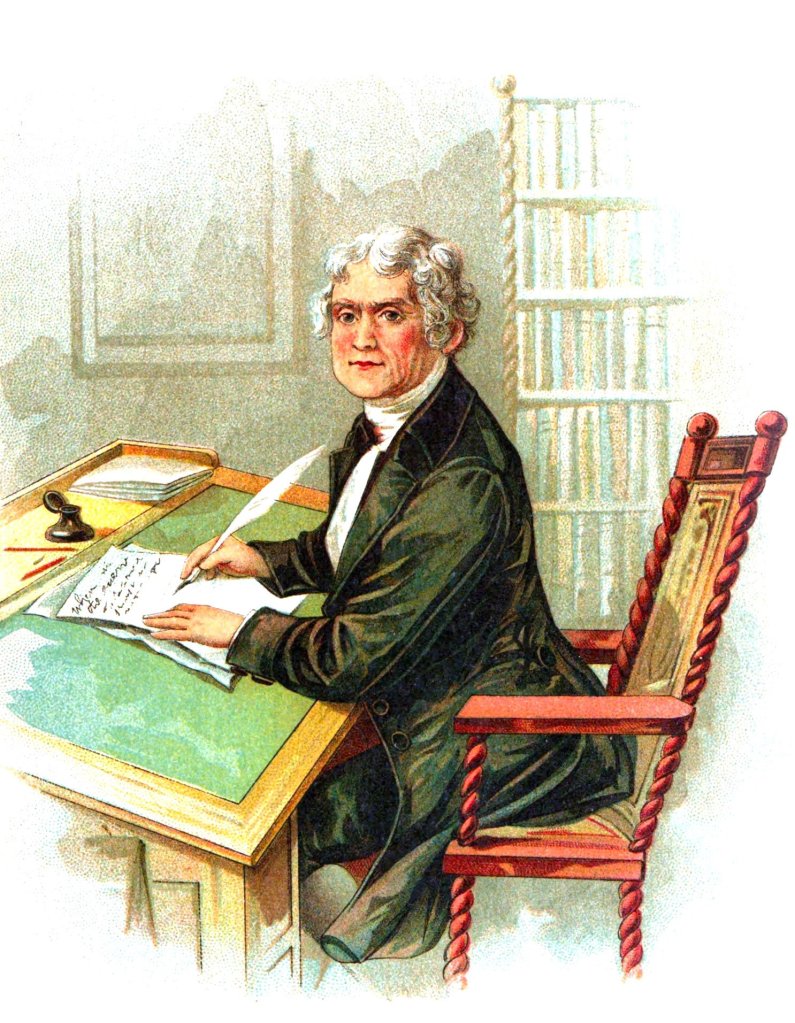
  • Thomas Jefferson

    The “Revolution” of 1800

    All the way back when Washington was president, and even before that, when the Federalists were not even a political party yet, and they were just a faction, the Federalists had a lot of support from a majority of the country. The Federalists won the largest margins with voters in the upper or middle classes and voters of English descent. 

    However, the lower class did not support the Federalists, or at least by as wide margins as the upper and middle classes. However, this was the largest segment of the population at the time, and the Federalist numbers began getting weaker and weaker. Many lower-income households only supported the Federalist candidates in an election, simply because Washington, whom they regarded as the great “Father of the Country”, recommended them.

    But then, on December 14, 1799, Washington passed away unexpectedly after contracting acute laryngitis, essentially a really severe cold. (In the modern-day, doctors are able to cure this disease.) With that, the country changed forever.

    However, many in the lower class had already turned away from the Federalists even before Washington’s death, partly because of the media. As covered in the last blog post, the Democratic-Republican media painted the Federalists out to be a movement intent on making America a monarchy and turning the US into a puppet of the British Empire once again. This, of course, was not true at all, but people (even today) believe what they hear.

    In reality, the Federalist Party and the men behind it (Washington, Hamilton, Marshall) held a strong record for success. However, this success came at a price, and this price sometimes frustrated the common man. The Federalists limited the common man’s political power because they feared the common man would be easily manipulated by tyrants, who used them to win elections and political influence. They implemented taxes to help fund the government, including a whiskey tax (which caused a brief rebellion) and tariffs, which drove many Southerners away from the party. They centralized political power and expanded federal influence to use the money collected through taxes to fund things like infrastructure projects, which, again, made many Southerners mad, because a majority of infrastructure projects were in the North. However, on the opposite side, Jefferson and the Democratic-Republicans promised to keep the prosperity and success of the Federalists while getting rid of the costs. Many Federalists turned to the opposing side because of some questions like these:

    Did the United States not stand for equality among men? Why should this minority of the population, despite their immense qualifications for the jobs they had, hold such power over us, the working majority?

    Why do we have to pay taxes? I thought we fought a war against taxation?

    And what’s this about the “federal government”? Why do I care about what happens in Massachusetts when I live in Virginia?

    Thomas Jefferson believed that the Federalists, at the end of the day, were not true representatives of true republicans. Rather, they were rich aristocrats who wanted to establish a one-party unitary state by not having parties at all.

    Jefferson truly believed that the Federalists had two ways of doing this: 1) either prevent any rival political parties from forming or 2) simply jailing any rival opposition factions. When President Adams signed the Sedition Acts, Jefferson believed that the Federalists had chosen Option 2. Basically, the Sedition Acts made it illegal to say anything that was false or misleading and critical of the government. Jefferson viewed this law as an unconstitutional overstepping of federal authority, wrote resolutions in both Kentucky and Virginia condemning it and essentially saying that states had the right to overturn the law if they wanted to (which they didn’t), and campaigned against it in the election of 1800.

    Jefferson believed that the law marked the beginning of an oppressive government and the end for democracy, and he believed that the only way to save America was to achieve a “revolution” against the Federalists, but one that was not violent, instead through the people’s vote. Combine Jefferson’s mass rallies across the country and the pro-Democratic Republican media, and you have a recipe for winning. Jefferson won the highest turnout in the country yet, and defeated Adams in a landslide. The Democratic-Republicans would dominate elections for 30 years, while the Federalists would eventually wither and die out. The Federalists were out of power for good, and now, Jefferson could begin enacting his radical agenda to reshape America.

    Thomas Jefferson Biography

    Jefferson was born on April 13, 1743, on one of his family’s plantations, in Virginia. His family was pretty rich and afforded to send him to school and then college. Jefferson was well, extremely smart at academia, and quickly became an extremely successful student.

    His biggest strength was his ability to understand and memorize information very easily. His biggest weakness, like so many people, was that he was easily distracted and loved being extravagant, maybe a little too extravagant. In fact, he spent the entire first year of college partying off like it was crazy time, and then doubled his workload his second year to compensate for his bad grades the first year. 

    Now, in the previous post, we discussed that Washington didn’t really have any formal education, but instead learned from first-hand experiences and trial and error. Jefferson was, well, the exact opposite. He learned stuff by reading books. His favorite genres were law, politics, and philosophy. He once wrote that literature was his life and that he “could not live without books.” 

    Jefferson decided to enter politics (because how else could he become the president), and he kind of developed a bad reputation. He was essentially an unrealistic dreamer. The things he proposed were often extremely radical, and were not really, well, realistic, and were often rejected by his more, well, sane, colleagues.

    However, despite this, Jefferson was chosen to write the Declaration of Independence by none other than John Adams (???). When the Declaration was written, Adams and other Founding Fathers were shocked. Jefferson rambled a lot in the document, and included really radical language. Adams essentially rewrote the document to get rid of these ramblings, so the idea that the Declaration was purely written by Jefferson is extremely misleading and false. Jefferson only provided the layout, but a majority of the words were written by other members of the convention like John Adams and Benjamin Franklin.

    Another myth about Jefferson was that he played a major role in the war, but … he really didn’t. After “writing” the Declaration, he would spend his time in his native home state of Virginia, where he would spend his time writing the state Constitution (and he actually wrote it this time) and serving as Governor of the State.

    It was around this time that Jefferson began an affair with his own slave Sally Hemings, who herself was the product of an affair and was actually Jefferson’s wife’s half-sister. (Man, this is messed up!) Reports suggest that the sexual relationship between Hemings and Jefferson may have even begun when Hemings was 14 years old. Jefferson and Hemings would go on to have 8 kids together, all of whom would either die in infancy or would be enslaved by their own father. Despite Jefferson defendants claiming that the kids were not Jefferson’s, a 2018 DNA study and some critical thinking prove that Jefferson had in fact fathered the 8 kids with Sally Hemings. (What the heck, Jefferson!)

    Once the war was over, Jefferson would be made the Minister to France until the French Revolution broke out in 1789. As I said in the previous post, Jefferson clearly supported the French Republicans, even helping them write their own mini-Declaration of Independence, called the “Declaration of the Rights of Man.” He caused so much diplomatic trouble that Washington called him back to the US where he would be made Secretary of State. He would clash with Alexander Hamilton, the Secretary of the Treasury, do some shady stuff to undermine Washington’s rule, and ultimately resign as Secretary of State in 1793 after the stuff was exposed.

    So let’s talk a little bit more about Jefferson’s ideology itself. It can be summed up in two words: egalitarian liberty. Or in simpler terms: decentralization, decentralization, decentralization. Jefferson believed that the country must be decentralized to preserve the local freedoms from the rule of the capital, which he saw as far off and disassociated from the realities of the day. He believed that the common landholding man should hold an equal degree of power and the rich aristocrat. 

    Now, both Jefferson and the Federalists believed that all citizens in the country should have equal protections in the Union. The difference came as in who should hold the most power. The Federalists believed the wealthy elite should hold the power because they themselves were above corruption and they would preserve democracy for the rest of the country. Jefferson disagreed. He believed that the wealthy would simply take all the power from themselves. Now, Jefferson also didn’t want the hand to go to the hands of the uneducated masses, sharing the belief they could easily be manipulated by candidates through disinformation techniques. Instead, Jefferson believed that power should be in the hands of the agrarian yeomen class. In Jefferson’s mind, these farmers were completely self-sufficient and didn’t need any outside support from the government. They had a physical stake in the country and thus were the only ones that were interested in preserving freedom because they were free personally because of their tireless efforts.
    The funny part is that Jefferson himself could not live to his standard. He was in debt for a good portion of his life, spent his money like a billionaire, and all the while claimed to be a mere tobacco farmer to his supporters. (What a hypocrite!)

    Despite the fact that he criticized aristocrats, he was one himself. He loved fancy food. He loved reading philosophical literature. He spent many hours writing and researching topics that average tobacco farmers wouldn’t have cared about.

    The crazy part to me is that he not only lied to the public that he lived a modest life, but he believed this lie himself. I just don’t understand how a man who was worth $286 million at the height of his life thinks he was a common man. If I was worth that much, I certainly wouldn’t.

    Now, I know that everything I just said speaks poorly of Jefferson’s character, but it is not to say that he didn’t have some good ideas in his agenda. His policies would have a long-lasting impact, with future administrations largely expanding upon Jefferson’s ideals rather than changing it until the Civil War. This would make the agrarian South the dominant political force in the country for 60 years, completely changing American history forever.

    As I just said a little while ago, Jefferson’s voter turnout was completely unprecedented. There were many strategies Jefferson employed, including campaigning aggressively and holding massive rallies, appealing to the common man through messaging, and using the Democratic-Republican media to essentially create a message and distribute this message to people across the country. Despite the fact that the Federalists carried support from twice as many publishers as the Democratic-Republicans, the Democratic-Republican media was more connected and was able to spin 1 message, not 1,000: Thomas Jefferson stands for the working man, while President Adams stands for the rich elites.

    With this, Thomas Jefferson would win the election of 1800 and would now radically change the direction of the country. This, of course, made many Federalists fearful and concerned about what would come. After all, the Federalists had ruled the country from the beginning, and this was the first transition of power from one party to the next.

    Now, before Jefferson took office, Adams tried to do whatever he could to make sure that Jefferson wouldn’t change all of what he had done. Maybe, he thought, the Federalists could take power back in a few years. That would never happen. There was even talk in the North to secede from the Union later on, but this would never occur.

    In a matter of weeks, the same radical who had refused to attend Washington’s funeral simply because he was the member of an opposing party was now the leader of the country. But it wouldn’t stop there.

    Before Jefferson, the Democratic-Republicans were somewhat of a minor faction in Congress, and they never carried more than 55% of seats. But after Jefferson became president, they maintained a 2/3ths supermajority for 25 years! (That’s crazy.)

    The Federalists could do nothing but watch. The country would be in the hands of the Democratic-Republicans for a long time, until they themselves died out and dissolved as a party.

    Thomas Jefferson Administration

    Jefferson pretty much undid all of the Federalist policies of his predecessors. Jefferson carried out his decentralization agenda, reducing federal power over the country and giving a lot of power back to the States. He also reduced the size and scale of the military dramatically, so that it would only be used defensively and would not antagonize other nations. The Sedition Acts were also repealed.

    On the bright side, however, Jefferson established West Point Military Academy, one of the biggest academies in the world to this day, significantly reduced the national debt by cutting government spending, and purchased the territory of Louisiana from France, doubling the size of the entire nation. Congress would authorize an expedition to explore this new territory, led by the now-famous Merriwether Lewis and William Clark.

    In his later years, Jefferson also signed the Embargo Act, which basically stopped all trade with all foreign nations because many countries, including the British, the French, and pirates from North Africa were violating US trade. However, the act caused a complete collapse of the economy, and the law was repealed just two years later.

  • The Federalist Era

    The Federalist Era

    The United States has, in just 2 and a half centuries, risen from the status of a backwater colony achieving its independence to the most powerful nation on the planet. To do this, we must have had some great and forward-thinking leaders. Out of our 45 presidents, we have had about 7 or 8 leaders who were the most influential in our country’s history, and then the rest who were important but simply expanded upon the ideas of their predecessors. Let’s start with the first president, and the only president who didn’t actually want to become president  – George Washington.

    Washington – Biography and American Revolution

    In 1732, George Washington was born in Westmoreland County, Virginia. His parents were Augustine and Mary Ball Washington. He was the oldest of 6 children and grew up in a moderate plantation-owning family. While his family was well-off, they were nowhere near to the wealthiest Virginia elites – at least not yet. Augustine was a successful landowner and planter who also ran ironworks. Washington lived in Ferry Farm, a plantation near Fredericksburg, Virginia. 

    Now, you might think that the Father of the United States went to school – but he actually didn’t. He only received basic education in mathematics and geography – that’s it! Also, he was taught writing by local tutors and a church school, but I’m not sure that really counts as actual school. But when Washington was 11 years old, tragedy struck the family, and the fun ended. Augustine died. Washington, the oldest of the family, quickly stood up and became the head of the family, showing his fast maturity as the family leader before he was even a teenager. Some skills!

    Washington’s half-brother Lawrence took the role as his father in his teen years and basically introduced him to Virginia’s elite society. I bet he never thought that he would end up the leader of this faction. Anyways, by age 16, Washington, without any school, was working as a land surveyor, mapping out lands in Western Virginia. The following year, he even became the official surveyor of Culpeper County, Virginia – when he was only 17!

    However, tragedy struck again two years later when Lawrence died, and thus, Washington would inherit his brother’s wealth. He spent a long time studying farming methods and spent a lot of time trying to expand the manor itself. He failed a bunch of times, but he learned and eventually figured it out. He later married a wealthy woman named Martha Custis. She was filthy rich from her late husband Daniel Custis. Over the rest of his life, he would double all of these land holdings, and he would become one of colonial America’s wealthiest men, with approximately $500 million in net worth!

    But Washington still wanted to be even more famous! At age 20, he joined the British military. His first mission was to deliver crucial information between British and French forces in the disputed Midwest. He completed the task effectively, earning fame and being promoted to Lieutenant Colonel. 

    However, Washington had a problem: he was young, naive, and somewhat stubborn of a man, so when he received these great roles and fame, he became overconfident of his abilities. When a native ally told him that the French were nearby, he blundered and attacked them. This ally probably told Washington this to play the British and French against each other. Washington hid in Fort Necessity. However, when the fort fell to the French, he was captured but later released.

    Anyways, Washington’s actions accidentally started a global world war known as the Seven Years War, or in America, we call it the French and Indian War. Obviously, accidentally starting a war in which one million people would go on to die brought some serious controversy to his name, and he was forced to resign in disgrace. He realized that he knew very little, and thus, he had to learn how to be a commander and train from the best. 

    Washington participated in a following British campaign against the French, but not as a commanding officer, but as an aide. He wanted to see how a seasoned military leader conducted himself in the various mechanisms of war.

    And then – it happened.

    The officer ,General Edward Braddock, fell in battle. British troops panicked. If Washington had done nothing, the French would’ve utterly massacred them, so he used the skills he had learned to order a hasty retreat, saving his army in the process. Whew!

    But still, Washington was done with war and dying (I mean, he started it), so he resigned and decided to enter into politics. If you combine his enormous wealth with his military fame, you got a leader that people are willing to vote for. Winning popular support from both popular farmers and wealthy landowners, Washington was elected to the Virginia House of Burgesses in 1758. 

    While he was part of the house, he began to realize that many of British policies, including the Stamp Act and the Townshend Acts, were actively hurting the colonies. He soon would become one of the leading organizers of the resistance against colonial rule.

    At the Continental Congress, Washington was pretty much the only guy who wore a military suit to the convention and with his popularity and well-recorded military experience, they decided Washington was best fit to become Commander-in-chief. 

    Now, unlike many believe, Washington was not a master strategist. In all honesty, he had really no idea how to run a military campaign. He lost battle after battle to the British, and he was continuously forced to retreat, and then retreat, and then retreat again. But this was expected.

    But one thing Washington was good at was rallying the troops. He knew how to get them excited and rallied up for a military campaign. He would use guerilla warfare and other unconventional tactics. He would strike when they were weak. Although the British were winning, he would deny them the satisfaction of real progress.

    My personal favorite example of this was in December 1776. Hessian mercenaries working for Britain assumed that they wouldn’t fight on Christmas day, and so, they spent the day relaxing, partying, and getting drunk. However, Washington knew this, and, realizing the mercenaries were temporarily distracted, swooped in for the kill at the Battle of Trenton and then retreated into the fog before reinforcements could arrive. Just wonderful!

    Anyways, these tactics would prove effective. After the British lost the Battle of Yorktown in 1781, they pulled out of the 13 colonies and the Ohio Territory, granting them independence as a new nation – the United States of America. 

    Washington’s Administration

    Once again, Washington was tired of war and dying, so he retired and just wanted to live out his days at Mount Vernon with his family. Despite speculation and even encouragement from his associates that Washington would take control of the government and establish a monarchy or military dictatorship, Washington left governance up to the Continental Congress, trusting they could take care of the country – but they couldn’t. 

    See, the problem with the congress was that there was no sole or central executive to lead the government. Therefore, there was no centralization of power, and the result was complete and utter chaos – from wars between states to massive populist uprisings. They needed one person to lead the country – and what better man than the man who had achieved this country’s independence: George Washington. 

    Now, Washington didn’t actually want to become president, but everyone basically forced him into doing it. He was elected unanimously and basically given a blank check to define the presidency. Most presidential traditions to this day were established by President Washington and his administration. 

    And yes, there were political parties, even back then. While Washington officially wasn’t a member of either party, if he was forced to pick, he would almost certainly pick the Federalists, who advocated for a strong central government, loose interpretation of the Constitution, a national bank, high tariffs & taxation to boost Northern manufacturing, and favoring Britain in foreign affairs over France.

    The Federalists were much more pragmatic than their opposition, the Democratic Republicans. (Ironically, the Federalists comprised northern states, and the Democratic Republicans southern states, a sort of precursor to the Civil War.) The Federalists believed that average citizens would be easily corrupted by power and would end up electing tyrannical dictators who would feed them misinformation, which they would believe. Thus, it was the role of the rich aristocracy to ensure and keep democracy alive. This was a long-term system with careful planning that the nation owes its deep survival to. 

    Washington and the Federalists would try to isolate the US from global affairs while making sure that the nation stood in its wealth and prosperity. They wanted to make sure that this democracy would last for centuries and would not just be a blip in time that would eventually lead to anarchic chaos. Other key actions by the administration would be to forge beneficial relations with Britain, establish a national bank, create the Supreme Court as a sort of third branch of government, and reform and expand the military.

    Obviously, almost all of these policies are exactly what the Federalists wanted. The founder and leader of the Federalist Party was Alexander Hamilton, who grew immense power within the administration. However, anti-Federalists, led by Thomas Jefferson, would end up breaking away and forming their own opposition party, the Democratic Republicans.

    Now, it’s worth noting that Washington opposed the creation of political parties because he saw them as divisive. However, it was most likely inevitable, as parties make sure that your ideas (Hamilton’s and Jefferson’s) will stay and will not get forgotten. Basically, they were a way to ensure that the ideas of these two would stay on.

    The media was very pro-Democratic Republican. They not only directed their attacks toward Alexander Hamilton but toward Washington himself for allying with Hamilton over Jefferson. They accused Washington of coercing Jefferson to resign when in reality, Jefferson resigned because of his own corruption scandals. They called Washington a dictator, a traitor to the country, and even a pro-British puppet. (Damn!) The stress of these constant media accusations was so rough on Washington that he decided to not pursue a third term.

    This partisan division even spilled into foreign policy. When the French Revolution broke out in 1789, many wanted the US to back the French Republicans because they stood for the same ideals of democracy and equality. However, it was the French kingdom who had backed the revolutionaries during the American Revolution, and they were the single greatest reason why the Americans won the war. When France asked the US to pay them back its debt, and the US said no, France spiraled into revolution after a bread famine. The same king who had been single handedly responsible for the independence of America had just been executed. Also, military officers who had participated in the American War for Independence on the American side were also executed!

    Federalists recognized that these French revolutionaries were not the same kingdom that had aided the US. These revolutionaries had not broken away and formed their own country; instead, they violently executed their king and queen and instilled a reign of terror on the population by beheading anyone they didn’t agree with. This did not represent American values at all! Yet, the radical Democratic Republicans supported them. When Washington rejected a proposed alliance between the US and France against Britain based on ideology, France prepared for war with America. (Wow, that escalated fast!)

    But Washington also had to deal with another crisis, right here at home. Native Americans in the Northwest Territory, which Britain had guaranteed to the US in the Treaty of Paris, began to rebel against the Americans. War erupted between the two, and, under Washington’s orders, many Native American villages were completely burned to the ground, and women, men, and children were massacred, so much so that Washington was nicknamed “The Butcher” by Native American tribes. This brought the Native Americans to the negotiating table, in which they signed the Treaty of Greenville in 1794. Basically, the US annexed 3/4ths of Native American land, and in exchange, the US would give … blankets? (Yeah, that’s right!)

    In conclusion, Washington’s administration set the precedents for which modern American governance has continued to this day. In his Farewell Address, Washington warned of increasing political polarization, advocating against the creation of political parties and against forming alliances and getting entangled and dragged up in foreign wars. Both of these pieces of advice have been broken, and the result has been pretty catastrophic to this country.

    John Adams Administration

    John Adams was Washington’s vice president, and at first, he was not supposed to be the Federalist nominee in 1796. Hamilton intended to run for president, but his reputation was tarnished by papers releasing of him confessing to adultery with Maria Reynolds, often considered the first major sex scandal in American history. Hamilton then selected Adams, who won the election in a landslide.

    Adams continued the work of Washington and the Federalists as president, both domestically and abroad. Adams continued to build up the military in case we had to go to war with France, but fortunately we didn’t. Instead, Adams and the French engaged in a series of minor skirmishes known as the Quasi War before Napoleon came to power in France and negotiated peace with Adams.

    Adams openly realized that if he started a war with France, it likely would’ve guaranteed him re-election. He would’ve been able to bring the Federalist Party together under a single banner of fighting France. It would’ve united the country against the pro-French opposition of the Democratic Republicans.

    On the other hand, America was now just a new country, and while the United States might’ve won the war, it would’ve left us exhausted and vulnerable to foreign dominance, maybe perhaps by Britain. 

    Adams put petty politics over the nation when he made the decision not to go to war with France, but he would eventually regret that decision, as America, his America, Washington’s America, would now undergo its first radical change.
  • Growth Unlocked

    Growth Unlocked

    Welcome to WordPress! This is a sample post. Edit or delete it to take the first step in your blogging journey. To add more content here, click the small plus icon at the top left corner. There, you will find an existing selection of WordPress blocks and patterns, something to suit your every need for content creation. And don’t forget to check out the List View: click the icon a few spots to the right of the plus icon and you’ll get a tidy, easy-to-view list of the blocks and patterns in your post.

  • Collaboration Magic

    Collaboration Magic

    Welcome to WordPress! This is a sample post. Edit or delete it to take the first step in your blogging journey. To add more content here, click the small plus icon at the top left corner. There, you will find an existing selection of WordPress blocks and patterns, something to suit your every need for content creation. And don’t forget to check out the List View: click the icon a few spots to the right of the plus icon and you’ll get a tidy, easy-to-view list of the blocks and patterns in your post.

  • Teamwork Triumphs

    Teamwork Triumphs

    Welcome to WordPress! This is a sample post. Edit or delete it to take the first step in your blogging journey. To add more content here, click the small plus icon at the top left corner. There, you will find an existing selection of WordPress blocks and patterns, something to suit your every need for content creation. And don’t forget to check out the List View: click the icon a few spots to the right of the plus icon and you’ll get a tidy, easy-to-view list of the blocks and patterns in your post.

  • Adaptive Advantage

    Adaptive Advantage

    Welcome to WordPress! This is a sample post. Edit or delete it to take the first step in your blogging journey. To add more content here, click the small plus icon at the top left corner. There, you will find an existing selection of WordPress blocks and patterns, something to suit your every need for content creation. And don’t forget to check out the List View: click the icon a few spots to the right of the plus icon and you’ll get a tidy, easy-to-view list of the blocks and patterns in your post.