Tag: politics

  • Reconstruction

    When you hear the term Reconstruction, you might think of rebuilding. Thus, you might assume that the Reconstruction period was the period that the federal government spent rebuilding any infrastructure that was destroyed during the war. And while this was true to an extent, Reconstruction was not just about rebuilding the South – it was about changing it demographically, politically, and culturally, forever, to ensure permanent Republican dominance over the country. As you can probably tell, that plan didn’t work.

    Andrew Johnson Administration & The Radical Republican Congress

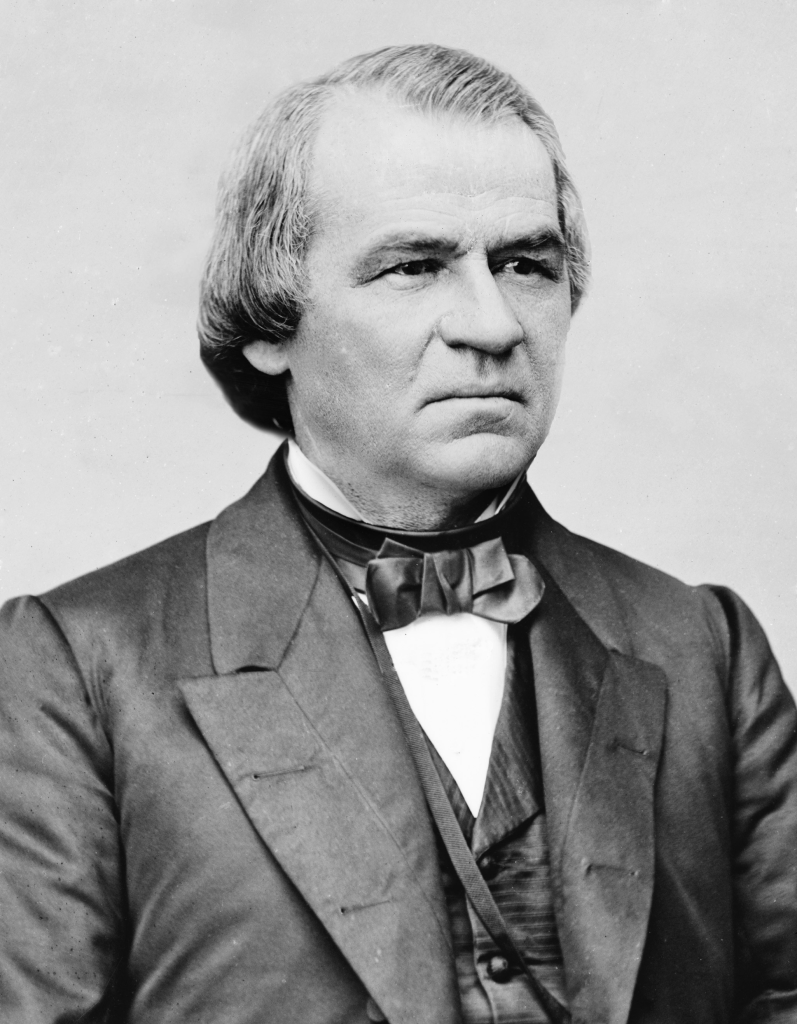
    When Lincoln was assassinated, Vice President Andrew Johnson took office and aimed to fulfill the moderate wishes of the now-deceased President, yet he was repeatedly stalled by a small faction of the Republican Party covered previously, the Radicals. Seeing enough was enough, Johnson went on nationwide rallies in 1866 to drum up support for Reconstruction policies, going on meaningless rants, comparing himself to Jesus, and publicly clashing with Republican hecklers. The press had a field day, and Johnson did exactly the opposite of what he wanted to by tilting public support in the opposite direction and leading to the Radical Republicans gaining a 2/3ths majority in Congress, which was enough to override the President’s vetoes and do whatever they wanted, meaning that the President was completely powerless. Congress told Johnson that his job was to execute the laws that they showed him, and if he didn’t, they would do it anyways. Johnson’s administration would focus on foreign policy for the rest of his term, successfully purchasing Alaska, unsuccessfully purchasing Santo Domingo, and pressuring France to withdraw from Mexico.

    Congress placed the South back under military rule because they feared that under current conditions, old Southern politicians would rise back to power and reinstitute slavery or reignite rebellion. The South was divided into five districts, each governed by a general, with the overall leader being General Ulysses S. Grant, a firm Radical Republican loyalist. Under Grant’s rule, the Freedmen’s Bureau was established, preparing freed slaves for their new life and explicitly teaching them to vote Republican for the rest of their lives, securing the Black vote for the next century and providing a pathway to carry Grant and future Republicans to the presidency (Grant would win a minority of the white vote but would only win because of the extra Black votes.)

    The fact that Blacks who were specifically taught to vote Republican were given the right to vote while many Southern whites who joined the Confederate Army and fought for their country were being politically disenfranchised saw many in the South to consider newly “elected” governments in the Deep South illegitimate. While the purpose of these measures was to prevent a Southern resurgence, it actually did the opposite because it inspired Southern resistance to the extremely one-sided and often incompetent government under which Northerners came to the South to make a profit off of the war-torn land and the cheap labor of Southern whites and newly freed slaves; so basically, newly freed slaves who were taught to vote Republican were allowed and encouraged to vote, while whites who could make actual decisions based on critical thinking were disenfranchised and not encouraged to vote, leading to a government that exploited both populations for their own gain. Southern whites blamed the Freedmen for electing this oppressive government despite the fact that the Freedmen were simply were doing what they had been taught, and thus the Klu Klux Klan was formed as a terror and insurgency group to target the Freedmen, seen as the base of support for the oppressive Radical government, leaving the Freedmen between a rock and a hard place and ultimately increasing North-South tensions, just as Lincoln had warned the Radicals before his death, yet the Radicals had refused to listen to their leader and prioritized revenge over national unity, leading to this complete mess.

    Now, the Radical Republicans had one major hindrance to their agenda – President Andrew Johnson, one of the last Moderate voices in the country. Expecting Johnson to fire Secretary of War Edwin Stanton, one of the Radicals’ last allies within the administration, they passed an absolutely ridiculous and unconstitutional law saying that a President cannot fire a Cabinet member, Johnson vetoed it, Congress overrode Johnson’s veto as the Radicals held a 2/3th majority, Johnson decided to fire Stanton anyways, Congress claimed that Johnson had violated the law and began impeachment proceedings, ultimately leading to Johnson being acquitted in the Senate with 35 voting to convict him, just one vote short of what was needed of removal, and the Supreme Court ultimately decided the law was unconstitutional anyways (which it very clearly was), meaning that the whole thing never actually should have happened. However, as the country wanted populist revenge rather than national unity, Johnson was incredibly unpopular and decided not to run for re-election, and the American people, in part because of the Freedmen who were taught to vote Republican, decided to vote the incredibly popular General Ulysses S. Grant, a person with no prior experience in business or politics, to the office of the presidency; Grant was the figurehead of the Radical Republican movement, and with the executive now under the Radicals’ control, all hell was about to break loose.

    Ulysses S. Grant Administration

    In just the 8 years of Grant’s term, the Republican Party became closely tied to businesses and industries specifically in the North; both Republican and Democratic politicians became increasingly corrupt and began using backdoor deals to increase their wealth and help their chances of winning elections; government secrets were being sold to any speculators that wanted to know where the economy was going; the Monetary Reserve was plundered due to Grant’s policy of “hard money”, despite the fact that the debt had multiplied 40 times since the Civil War began; the South was being sold off to rich businessmen (nicknamed “Carpetbaggers” by white Southerners) who only won their elections because of the Black vote, which only went for them because the Freedmen’s Bureau taught them to vote Republican; and instead of doing anything about this rampant corruption, the members of Grant’s administration, most of them being friends and family members of Grant himself, each had their own corruption scandals that they were each embroiled in, and when these scandals became public, Grant spent all of his entire attention protecting them from the punishment of their crimes. Now, the argument that some historians make is that Grant was simply a poor, naive guy that was just too gullible and inexperienced, and it wasn’t his fault that he appointed them. Well, (a), it’s still his fault even if he wasn’t involved in the corruption, and (b), do you really think that Grant, the same President who appointed his own family and friends to the administration, who made and profited off of corrupt deals, sold sensitive financial information to speculators, pushed agendas that other individuals bribed them for, and attempted to cover it up, and who, again, Grant actively worked to protect them from the consequences of this corruption, wasn’t involved in some personal corruption himself? That’s very hard to believe, and yet many historians do so.

    Now, apart from corruption, Grant’s presidency was also plagued by another issue: Native Americans. Back, during the Civil War, the Native Americans, who practiced slavery themselves, generally chose to side with the Confederacy, which turned out to not be the best move. Lincoln argued that because the Natives chose to rebel, they violated the treaties that they signed with Jackson where the Natives basically agreed to move to reservations, and in exchange they could do whatever they want in those areas. Lincoln’s treatment was the same as toward the South: he would pardon them of their crimes, and in exchange, they would swear their loyalty to the Union and abolish slavery. Yet, when the Radicals took charge, they started violating those treaties, reducing the land that the tribes held, moving both Indians and non-Indians to the land. Eventually, the Indian Territory would be abolished and replaced with the state of Oklahoma. The government would end Jackson’s policy of signing treaties with the Natives and restore Washington’s policies of assimilating them through force, ending their status as, essentially their own countries. The Native Americans perceived assimilation as an attempt to destroy their culture, which it probably was, and refused these policies. This sparked a series of wars over the next two decades that the Americans would ultimately win and assimilate into American culture, which, indeed, turned out to destroy their own cultures almost entirely.

    Grant would also readmit the remaining states back into the Union and restore voting rights to former Confederates in 1872. With this, the Republicans slowly began to lose power in the South. Eventually, the Democrats were able to retake the House of Representatives in 1874 and begin investigating Grant’s corruption, while also doing everything they could to push back against Northern influence in the South.

    The Election of 1876

    Despite the fact that all of the former Confederate states had rejoined the Union, Grant decided to keep South Carolina, Louisiana, and Florida under military occupation. Suspiciously enough, those same three states saw major fraud occur in these states in the election of 1876. Congress set up a commission to find out who won the election in those states, but before that, both parties met and agreed to a compromise: the Republican candidate for the election, Rutherford B. Hayes, would win those three states and thus the election, but in exchange the Democrats would achieve some major policy victories. The occupation of the South by the military was to be ended, and the South would be free to deal with its Black population as it pleased (spoiler alert: they wouldn’t treat them that well), and a Southern Democrat would serve in Hayes’ cabinet. There were also two other conditions that probably would have strengthened the South’s economy that were proposed but ultimately scrapped. And with that, a new period of American history began, one not ruled by Radicals but ruled by moderates.

  • Civil War

    If there was one man who you could say laid the foundation for the Civil War more than anyone, it would be Thomas Jefferson. After the Democratic-Republicans demolished the Federalists and became the sole party, the movement split among regional and ethnic lines, particularly between the North, predominantly German and English, and the South, predominantly Scotch and Irish. The North focused on the Declaration of Independence, which stated “all men are created equal”, more than the Constitution itself, which permitted for the existence of slavery in it. This caused a debate over whether the nation was created in 1776, when the Declaration was signed, or in 1789, when the Constitution was created. This debate became even more ridiculous and extended to over whether the Southern colony of Jamestown or the Northern colony of Plymouth founded the country. After all, Jamestown did technically come first, but in the North’s mind, the Pilgrims came to America to worship God, while the Southerners came to profit and introduced slavery into the country. As the Democratic Party became a puppet of the Deep South’s ideals, the North wanted their own party, combining the Federalists’ favoring of a strong central government, Jefferson’s call for equality among all men, and the Whigs’ policies of high tariffs, industrialization, and infrastructure investment. Now, the Whigs actually ended up collapsing in 1854 because of internal divisions between the radicals and moderates over the issue of slavery. A number of smaller parties formed, including the Liberty Party, dedicated to immediate abolition of slavery, the Free-Soil Party, van Buren’s party, dedicated to stopping the expansion of slavery, promoting homesteading, and supporting internal improvements, anti-Nebraska Democrats, the moderates who had been sidelined from the Democratic Party after the Deep South took over, and the anti-immigration Know-Nothing Party. All of these smaller parties and disillusioned Whigs all formed together to create the Republican party, which was a puppet of the North, in the same way that the Democrats were a puppet of the Deep South. That’s right, the Democratic-Republicans had finally split into the Democrats of the South and the Republicans of the North. The Republicans actively campaigned themselves as the party of the North. They framed the Democrats as the party of the South and thus the party of slavery. After all, there were 18 free states to 15 slave states, so if the Republicans could just win all the free states, they could win the election. There was no more reason to compromise with the South, whether on slavery, agrarianism, or states’ rights. The North stood for freedom from slavery, for free markets, for free land in the West if you wanted it, for national infrastructure, and for tariffs. The North had once again taken back the power the South had taken from them in 1800. With such a big majority, it appeared inevitable that the Republicans would win, but in 1856, their candidate, John C. Fremont, didn’t win because he was a Radical Republican (a faction of the party we’ll talk about later), and the Republicans knew they needed to choose wisely in 1860 to win, and they did, picking a former Whig and moderate Republican, Abraham Lincoln, granting them an overwhelming landslide in the election.

    Abraham Lincoln Biography

    Lincoln grew up in a poor log cabin in Kentucky, but after his family lost most of their land in a legal dispute that they couldn’t afford to change, they moved to Indiana. Tragically, at 9 years old, young Abe lost his mother, but his father then remarried, and his new wife brought over her own children, adding four more people to live in the cramped house. However, his father became sick, and thus Abe worked tirelessly day in and day out just to be able to live an affordable life. Abraham was not a big fan of his father for obvious reasons, and because his possibly illiterate father would punish him for trying to learn how to read and write. Eventually, Abraham finally left the house, and he only visited his father one more time in his life, neither inviting him to his wedding nor going to his funeral. A possible reason why Abraham opposed slavery might have been that he wanted the slaves to leave their difficulties and start anew, just like he did.

    Abraham ended up in a small community in Illinois, and he soon became famous as a good and respected man. He taught himself law and became an effective and prominent lawyer. He was a member of the Whig party, and he idolized Speaker of the House Henry Clay. His political beliefs were that of Henry Clay, meaning high tariffs to protect American industry, investment in infrastructure to help modernize transportation, general free market economics,  his containment and gradual elimination of slavery, and the relocation of African Americans to a separate colony or reservation to keep them safe from discrimination by whites.

    Abraham’s story is one of failure. He failed so many times but felt the need to just keep going, and he eventually got to become President of the United States. See if you can keep up with this: In 1832, he lost his first run for the Illinois state legislator. The following year, he created a small business, a general store, which failed severely and left him deeply in debt. However, in 1834, he ran again for state legislator and won this time. The following year, tragedy struck, as his fiancee died, leaving him in a deep personal depression. It got worse the next year, as he got a nervous breakdown and was bedridden for months, though he eventually recovered. In 1838, he lost his bid to become Speaker of the Illinois House. In 1843, he failed to secure the Whig nomination for Congress. In 1846, he got the nomination and was elected to the House, where he was one of the most vocal opponents of the Mexican-American War. Two years later, he lost the Whig nomination. In 1854, he lost his Senate race because he opposed the Kansas-Nebraska Act, and after the Whig party collapsed, he joined and became a prominent leader of the Republican party. In 1856, he failed to win the Republican vice presidential nomination. Two years later, he did extraordinarily well in the famous Lincoln-Douglas debates, but he lost the Senate race. And finally, in 1860, he was picked by the Republican party as a compromise candidate between the Moderate and Radical Republicans, and he won the election in a landslide, becoming President of the United States. Wow, what a great story!

    However, the Deep South wasn’t a fan of this Lincoln guy becoming president. Now, LIncoln had said that he didn’t want to get rid of slavery in the states where it existed. That could only be achieved through the amendment process, which Lincoln had no control over. He only wanted to ban it in the new states out west. But the South wasn’t stupid; they knew that their time in the Union was up. They had been betrayed by both the Whigs and the Democrats. They repeatedly made compromises that the North refused to follow. And now, the leader in charge was saying that the South was evil for doing what they had legally been doing for 200 years with no backlash. The North, with all its guts, hated the South, and with Kansas and Nebraska becoming two more free states, it appeared that the North had won. Jefferson had promised the South that they, the agrarian yeoman class, was fit to rule the nation, not the urban elites in the Northeast. In the Revolution of 1800, they had defeated these urban Anglo-German elites and completely demolished the Federalist Party. They were the leader of the Union, and their values of agrarianism, free trade, and states’ rights had flourished during this time. It only stumbled under weak leaders like Martin van Buren, Millard Filmore, Franklin Pierce, James Buchanan, and others, Northerners who claimed to represent the South. The South had compromised so much to keep their values strong, but again and again, these compromises were violated, and the South would usually try again. But this time, they were done; they were ready to leave. As Lincoln had once said, “A house divided against itself cannot stand. I do not believe this government can permanently endure, half-slave and half-free.” And he was right.

    The first state to secede was South Carolina, the same state that had almost seceded over Andrew Jackson’s tariffs, who proclaimed, “an increasing hostility of the non-slave holding states to the institution of slavery, has led to a disregard of their obligations, and the laws of the General Government have ceased to effect the objects of the Constitution.” Next was Mississippi, who proclaimed, “Our position is thoroughly identified with the institution of slavery, the greatest material interest of the world.” And 9 more states would leave and form the Confederate States of America, a more decentralized and democratic confederation but one with protections for slavery. In a speech, the Confederate vice president stated that the new government rested upon what he called “the great truth of racial inequality.” Strangely enough, the President at the time, James Buchanan, a Democrat, basically said that while secession was illegal, he couldn’t do anything to stop it.

    Abraham Lincoln & The Civil War

    On a quick side tangent before we get to the important stuff, before Lincoln’s election, he was told by an 11-year-old girl named Grace Bedell to grow a beard because it would help him win more votes, especially from women, who might’ve persuaded their husbands to vote for him, and he grew one before the inauguration, so that’s good. Apart from what we know about Lincoln today, a.k.a his handling of the Civil War, Lincoln did do some other cool stuff, including raising tariffs, creating homesteads, providing land to states to establish colleges, and authorizing the construction of the Transcontinental Railroad. He also established a temporary federal income tax, unified the banking system, and instituted a military draft, all to help the war effort, and he suspended habeas corpus, the right to due process, to preserve stability and arrest any Confederate sympathizers on the spot. (He even deported a Congressman to the Confederacy.) Okay, now let’s talk about his handling of the Civil War.

    To Lincoln and the country, the primary concern was not the abolition of slavery, but the preservation of the Union. Lincoln offered to give forgiveness to the states that seceded from the Union, enforce the Fugitive Slave Act, and pass an amendment to permanently allow slavery in the South. But, again, the Deep South wasn’t stupid, and they knew that once enough free states came, they would have a 3/4ths majority and would repeal the amendment and outlaw slavery in the whole country. So, they refused. 

    Then, Lincoln told the CSA that while he wouldn’t attack them, he would protect federal assets within the seceded states, including Fort Sumter. The fort was in the harbor of South Carolina, and, from the Confederacy’s perspective, its sole existence threatened the sovereignty and legitimacy of the new country, and so, to show Lincoln they meant business, they attacked it, hoping that Lincoln wouldn’t risk a civil war and would just let them have their way. But instead, Lincoln used the attack on the fort as a justification to initiate war, sending out a call for 75,000 volunteers. Unfortunately for Lincoln, this call would cause four more states to secede, that being Virginia, Arkansas, Tennessee, and North Carolina, while four other states, Missouri, Kentucky, Maryland, and Delaware chose to remain with the Union. 

    Military-wise, Lincoln had a strategy. There was a very brilliant general, Colonel Robert E. Lee, who Lincoln hoped would lead the Union to win a speedy victory. However, Lee, who is actually an indirect descendant of George Washington by the way, lived in Virginia, and despite the fact he personally opposed slavery and considered it evil, he still chose his state over the Union. Without Lee, Lincoln was stuck with General Winfield Scott, who was so fat he had to be mounted on a horse.

    If you kept up with Lincoln’s life story, see if you can keep up with this. The first two major battles, the Battle of Manassas and the Battle of Wilson’s Creek, were both losses for the Union. Winflied Scott was way too old, so he just decided to retire. He was replaced by George B. McClellan, who was a brilliant organizer and a pretty good commander but was criticized for being overly cautious and was removed from command. John Pope was the next commander and was replaced by George McClellan after he lost the Second Battle of Manassas. General Lee decided to invade the Union and capture D.C., but his plans were leaked to the Union, allowing McClellan to masterfully defeat Lee at the Battle of Antietam, but Lincoln fired him again because he refused to pursue Lee. The next general was Ambrose Burnside, who was fired after he lost the Battle of Fredericksburg and was replaced with Joseph Hooker, who was fired after he lost the Battle of Chancellorsville despite the fact that he had more men than Lee. He was replaced by George Meade, who managed to win the Battle of Gettysburg and turn the tides of the war. Wow, that’s a lot of generals!

    Eventually, however, Lincoln appointed General Ulysses S. Grant as General-in-Chief. Grant was a different type of commander than others. He was especially ruthless, ordering his soldiers to commit acts that, today, would be considered war crimes, such as burning entire cities to the ground and turning a blind eye to looting and rape. He would often throw his men at Southern armies, which, while it would cause mass casualties for his men, would work because by this point, the South was beginning to run out of resources. The North could replenish these losses; the South couldn’t. It was reckless, but it worked. Now, obviously, many Northerners weren’t too happy at this, and many criticized Lincoln for appointing Grant, whom they called the “Butcher”, to his position, but from Lincoln’s perspective, he would do anything to end the war so quickly. He began to ask why God was taking so long to decide the victor. Grant’s justification for all of this bloodshed was that it was revenge for the Mexican-American War? (Yeah, I know it’s kind of a weird justification.) In his mind, the war was solely for the pursuit of expanding the evil institution of slavery, which it was. To Lincoln, if the war was to continue in the pace it was without Grant’s brutal tactics, it would be an essential attrition war to reconquer the South. Even if they managed to do it, the Southerners would not forgive this, and they would rebel again if they had the ability to do so. Lincoln’s decision was to inflict a harsh blow to the South, but to personally help them recover to remind them that they are still welcome in the Union.

    Lee officially surrendered to Grant at Appomattox Court House on April 9, 1865, and while many of Lee’s men wanted him to continue fighting, Lee didn’t want to see any more destruction to either the North or the South. Since the Eastern theater was the main one in the war, the conflict was effectively over. Lincoln, who had just won re-election in November 1864 against disgraced General George McClellan, the first president to do so since Andrew Jackson, was optimistic and ready to lead the country, both North and South, to a speedy recovery. With the war over, Lincoln felt that he didn’t have to follow through on his promise to the South to not end slavery, and so he officially ended the evil practice through the 13th Amendment. Lincoln’s criteria for the Southern states to reenter the Union was that they must ratify the new amendment and that 10% of each state’s population must pledge an oath of loyalty to the country.

    Competing Plans For Reconstruction

    Immediately after the war, Lincoln would place the Southern states under military rule, but once these states were reintegrated into the Union, everything would return back to normal. Lincoln personally helped rebuild the states of Louisiana, Arkansas, and Tennessee, and all three of these reconstructions went very well, and a majority of these states’ populations were happy with it. With the exception of upper leadership, most Confederates were granted total amnesty as long as they pledged loyalty to the Union.

    However, there was a small but growing faction – the Radical Republicans, who criticized Lincoln as a moderate, demanded more privileges and securities for the Freedmen, and wanted to punish the South harshly. Throughout the Civil War, the Radicals in Congress, led by Thaddeus Stevens in the House and Charles Sumner in the Senate did everything they could to bypass the authority of LIncoln and the courts through independent committees like the Joint Committee On The Conduct of War, which was found to investigate any Confederate sympathizers, and in the Radicals’ mind, “Confederate sympathizer” meant anyone who ordered a tactical retreat or basically anything other than a reckless Grant-style charge at the enemy. This led to the firing of skilled officers who graduated from West Point and the replacement of them with incompetent or corrupt officers, which, in the end, led to greater casualties on the Union side. The Radicals did everything they could to interfere with the war and especially post-war Reconstruction, including, for example, passing a bill to require stricter loyalty oaths from Southern states, which Lincoln pocket-vetoed. They were the Deep North if there ever was one. They saw America not as a Union but of two entities, the North and South, one of which was dragging the other down with it. The Radicals believed that the South and its population was lesser than them, and it should be brutally colonized and reorganized at the North’s will. They believed that the South should be stripped of their statehood, all white Southerners, including ones that didn’t own slaves, should be deprived of all of their rights, including the right to vote, the Freedmen should be given greater political power than whites, and new populations from the North should remove and replace the old one, and only after all of these things happened should the South be reintegrated into the Union as states.

    The President disagreed. A kind and forgiving man, Lincoln believed that the Southerners didn’t deserve these conditions, and that they would rise up and rebel if these policies were implemented. Remember, I can’t stress this enough: Lincoln’s goal throughout his entire presidency was to ensure the Union survived. This meant forgiving the South now that slavery was done away with. This meant the North should welcome the South back in with open arms, not seek to subjugate, conquer, and eventually erase them.

    Of course, there was also a very big question: What was the Freedmen’s role in America? He was now as free as his master, but was it possible for him to do this in the same nation that had held him and his family in brutal slavery for 2 centuries? Should he be equal to whites or should he be a second-class citizen bound by a system of racial discrimination and segregation? Should this be up to the states to answer these questions? Will this whole debate end in another civil war once again?

    Lincoln was deeply concerned and troubled. He knew that the Freedmen had been through so much, and the masters would not just let their slaves walk untouched. He feared mass discrimination, segregation, and violence against the 4 million African Americans in the South. He feared that these African Americans would not be able to find a job, become unemployed and homeless, and ultimately be a drain on the economy.

    However, Lincoln had a solution, the same as his role model Henry Clay: colonization, the establishment of an exclusive reservation where African Americans would be free to create a society where they were free to govern themselves, pursue their self-sufficiency, and do as they please beyond the threat of racial discrimination, segregation, and violence. It’s kind of like Jackson’s Native American reservation, only it would be somewhere outside of the United States and movement to the colony would be voluntary, not required, and if they chose to stay they could become subject to any segregation or discrimination laws in that state. 

    Okay, so Lincoln had his plan, but the next question was where would this colony be located? Lincoln ordered investigations into Central America, South America, Africa, and the Caribbean, but the Civil War was still going on at the time, so nothing came of this. There is an interesting theory that prominent abolitionist Frederick Douglas, who believed the Freedmen should remain in America and be integrated into American society, talked Lincoln out of colonization, but this would only be true if Lincoln never mentioned about colonization after the meeting, but this is wrong, as right before the Civil War ended, Lincoln and his cabinet members began establishing colonization plans. The likely explanation for Lincoln not talking to his cabinet members about colonization is because, at the time, he was losing the war and faced prospects of a loss in the 1864 election, but since there was a victory right before the election, Lincoln ended up winning it in a landslide, winning every state except Kentucky, Delaware, and New Jersey.

    Pretty much all of the country, including pretty much all moderates and Democrats, supported this colonization proposal. Most Southerners supported this plan because they didn’t want to have to find work for all 4 million Freedmen, while Northerners supported this plan because they didn’t want African Americans to migrate en masse to the North and either put low-skilled white labourers out of a job or not be able to find a job themselves and ultimately become a drain on the economy (which is what actually happened.) Lincoln put these concerns to rest with his brilliant plan that, if implemented, could have possibly spared the African American population from 100 years of racial violence, institutionalized racism, and segregation. Only the Radicals on both sides, the Radical Republicans who wanted full integration, and the Radical Deep Southerners who wanted slavery to come back, were unhappy with this proposal. In the end, the Radicals got their way.

    On April 14, 1865, President Lincoln attended the play “Our American Cousin” at Ford’s Theater with his wife and two friends. At 10:15 p.m., John Wilkes Booth, a radical Confederate sympathizer, went into the presidential box and shot Lincoln with a .44 caliber Derringer pistol, leaped onto the stage, yelling “Sic semper tyrannis” (Thus always to tyrants), broke his leg in the fall, got onto the horse, and fled. Lincoln was carried across the street to the Peterson House, where he died the next morning. Secretary of War Edwin Stanton solemnly declared, “Now he belongs to the ages.” Lincoln’s funeral traveled across the East Coast until it reached his home town in Springfield, Illinois, with massive crowds along the way marking one of the most somber events in American history. Booth was captured in a barn 12 days later. The soldiers set his barn on fire, sending Booth running out, where he was shot. Several of his co-conspirators, who were supposed to assassinate the Vice President and Secretary of State but failed, were tried and executed for their crimes.

    And with that, the Age of Lincoln was over as quickly as it had begun. Despite his undenied greatness, he was never a peacetime president, and he could not shape the future in his image. While Lincoln was elected as a Republican, in truth, he was a Whig. He was the last and greatest Whig president, carrying out pretty much all of their political policies through, though he did so during wartime. And with that, the quite possibly greatest president of all time was dead, and the Radical Republicans betrayed his legacy to cease power for themselves through corruption and, in the process, ruined the country forever.
  • The Road to War

    Zachary Taylor/Millard Fillmore Administrations

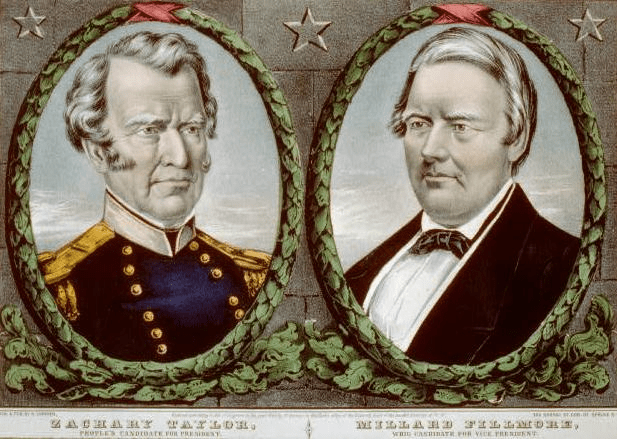
    General Zachary Taylor narrowly won the 1848 election because van Buren split the Democrat vote and that he was a popular Southern general from the Mexican-American War, showing that, once again, the Whig’s strength came from copying Jackson’s personal character (Southern war hero) but having an ideology aligned more with Senator Clay. However, just like the last Whig who was elected to office [William Henry Harrison], Taylor would die just 1 year into his term, with some historians suspecting that he was poisoned.

    With that, Vice President Millard Filmore ascended to the office, and his presidency was also kinda boring. He is probably the closest that the Whigs got to a full presidential term, considering that Harrison and Taylor died and Tyler governed more like an Independent, and he decided to compromise with the Democrats on slavery to just narrowly get support for other Whig policies, which only divided the party even further along the Northeast, the radical abolitionists whose only goal was to end slavery, and the Central States, whose main goal was moving the country forward, even if it meant compromising on the issue of slavery. Many historians call Fillmore a Southern sympathizer, even though he actually opposed slavery personally but, just like other Whigs, didn’t want to start a civil war over it. Fillmore decided not to run for a second term, and the Democrats would win the subsequent election.

    Franklin Pierce Administration

    Under Democrat Franklin Pierce, the North-South divide only became even clearer. Pierce didn’t actually believe that he was ready for president, but was sort of forced into the position by his Democrat colleagues, who believed that a Northerner with pro-Southern (and thus pro-slavery) views would unify the country, but they were very wrong. Pierce would see his own son get nearly decapitated in a horrible train accident  where he was thrown off of the train car only two months before being inaugurated, and he would ultimately become depressed and end up an alcoholic for the rest of his presidency.

    Now, before I continue, I do want to explain this slavery situation a little bit more and clear up some of the misconceptions surrounding it. Most of the country knew that slavery was morally wrong and wanted to end it, and it really was only in the Deep South that slavery was either considered moral as African Americans were believed to be comparable to animals or that slavery was wrong but it was okay because it allowed the South to continue controlling the government. However, there were the opposite radicals in lower New England, people who demanded that slavery be abolished immediately and the Freedmen to be fully integrated as American citizens. The New Englanders painted slave owners and complicit Southerners as sinners, while painting those who personally disliked the practice but supported it publicly to not start a civil war as traitors. This was the result of the Second and Third Great Awakenings, which created a huge demand for reform and social justice by any means necessary. There were also less radical groups in the abolitionist camp like the Quakers in Pennsylvania and the Scandinavian immigrants in the Far North. The most infamous abolitionist was John Brown, a religious lunatic who believed that God chose him to be the new Moses and lead the slaves to freedom, who went on a murderous rampage of Southern families in Kansas and attempted to lead a genocidal armed slave revolt in the South that failed horribly and led to his hanging. To the Deep South and Lower New England, it was better to let the Union die than to compromise on the position. You were either with them or with the enemy; there was no moderation.

    Now, most moderate Whigs and Democrats believed that slavery should be gradually eliminated state-by-state, as the Constitution very clearly says that powers not delegated to the federal government (i.e. the power to restrict slavery) to the states, and that it was illegal to do otherwise. They also agreed that once slavery was abolished, the freed population should be relocated to a separate place so that they wouldn’t be the target of any discrimination or violence, sort of like a Native American reservation, but for African Americans. However, the debate was between whether slavery should be extended out into new states to maintain a North-South balance, with slavery being eliminated over a gradual period of time, the Democrat position, or that slavery be restricted to the South, squeezed, and eliminated more quickly, the Whig position. Unfortunately, the Democrats would essentially be overtaken by the radical Deep Southerners, with moderates either sidelined or being expelled from the party. Remember, Jackson had warned that politics would become increasingly sectional, which would give the pro-slavery Deep South a major voice, but it turned out that the party of the Deep South would become the party he founded. The Democratic Party, the party of states’ rights, agrarianism, decentralization, and democratization, was now essentially the party of slavery.

    Now, President Monroe had proposed a solution to this problem: the Missouri Compromise, which stated that all Western lands north of the 36th parallel would become free states, while lands south would become slave, and at the time, the only Western land in that zone was Arkansas Territory. Northerners were content that slavery could no longer expand and it would be squeezed out and eliminated. But then, Polk took over Texas and the Southwest, areas that were below the Missouri Compromise line and thus viable to be slave states, which led to the Deep South, now the voice of the Democratic Party, to call for further invasions of Cuba and Northern Mexico, which would mean even more slave states and would balance out the free and slave states; in response, the North called for the banning of slavery in the new territories west of Texas, which made many Southerners who personally participated in the Mexican American War really mad. President Taylor rapidly granted California statehood on the condition that it banned slavery, which showed the South that the North was willing to break the Missouri Compromise to get what it wanted. He wanted to do the same thing with New Mexico, but then, he mysteriously passed away. President Fillmore passed the Fugitive Slave Act as one of his compromises with the Democrats, which pretty much just reinforced what the Constitution said, that if a slave was to escape a slave state and go to a free state, the free state should do everything in its power to return that slave back to the slave state, but was repeatedly being violated by the abolitionists through the Underground Railroad. Of course, the abolitionists still refused to follow the law, even when the new act introduced punishments for helping slaves escape. 

    Again, we need to look at this from the perspective of the South as to find out why they eventually decided to secede. We all know slavery is bad, thus helping escaped slaves is good. But let’s look at this from the perspective of the South: imagine you repeatedly lose lots of money, and so does your neighbor, and your neighbor’s neighbor, and so forth. Then you find the people who stole the money, but the people in charge refuse to arrest them, and so does the government that is required to by law. Now, you begin to understand why the South was so mad. With the government doing nothing, they felt they needed to take it into their own hands, a.k.a secede. Meanwhile, the Northerners in the Underground Railroad were being punished for doing the right thing and just trying to help. Soon, this tension would break out into violence.

    So the nation’s already very volatile and about to explode. Now, it was in the hands of a pro-slavery alcoholic who’s severely depressed. What did you think would happen?

    Pierce would repeal the Missouri Compromise in 1854 and instead allow for the people of the states to vote and choose whether or not to ban slavery, kind of like what the states do with abortion today. Most states were already inevitable free states and slave states, but the one state that could go either way was Kansas. So, both pro-slavery Deep Southerners and abolitionist Northerners flocked to the state, and things began to get ugly, really ugly, so much so that the time was referred to as “Bleeding Kansas.” The violence even spread to the halls of Congress, with a pro-slavery Southerner beating up an anti-slavery Northerner with a cane, and getting away with it. The American justice system!

    Pierce, like other pro-slavery Democrats, believed that the radical abolitionists were the greatest threat to national unity. He once said, “I have never believed that actual disruption of the Union can occur without blood; and if, through the madness of Northern Abolitionists, that dire calamity must come, the fighting will not be along Mason’s and Dixon’s line merely.” Yeah, you’re also one of our worst presidents, ever, Franklin.

    James Buchanan Administration

    Buchanan was exactly what the country needed at the time. He was a great leader, a strong leader, and a powerful leader. He was so great, in fact, that he was able to resolve conflicts peacefully and prevent the Civil War and go down in history as the greatest man of all time….

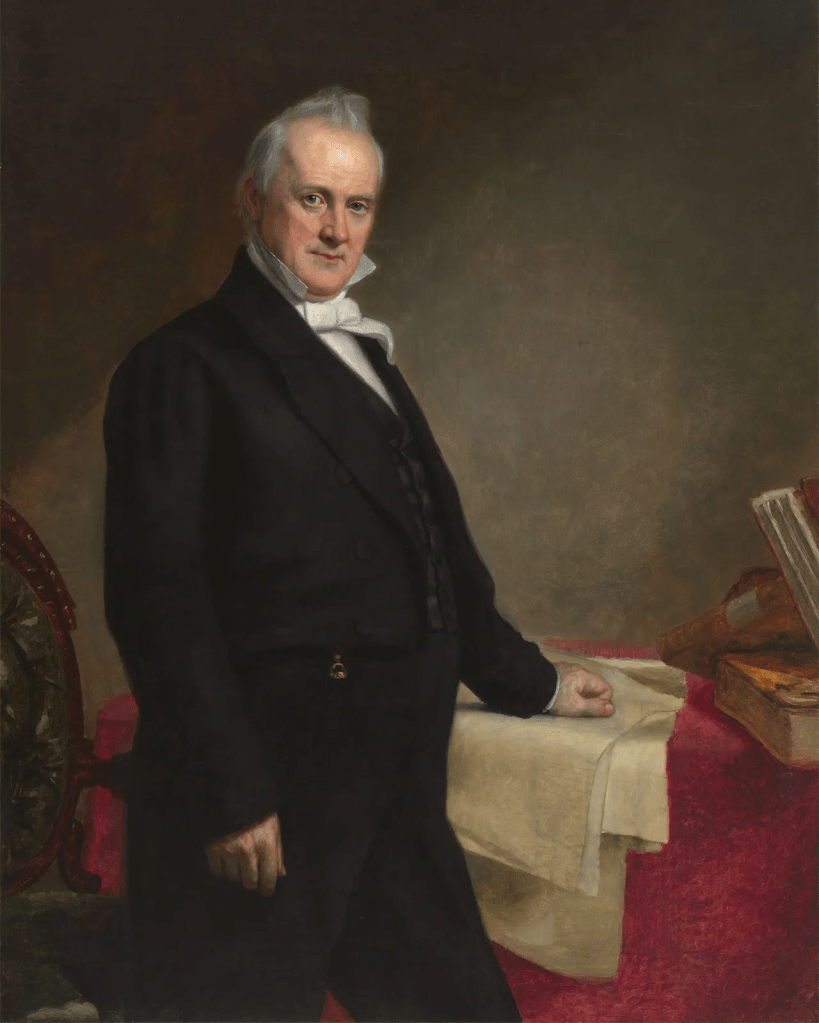
    Just kidding. Buchanan couldn’t even get a wife, with his girlfriend running away before their marriage. How was he supposed to run the country well? He was, unfortunately, another Democrat, a representative of the Deep South and their extreme pro-slavery views. He would lower tariffs significantly, attempt to make Kansas a slave state, which would fail, and attempt to incorporate Cuba and Northern Mexico into the Union as slave states, which would also fail. 

    However, the country was done with slavery, and they wanted to end it, even if it cost 750,000 lives and $100 billion.

  • Transition & Expansion

    Martin van Buren Administration

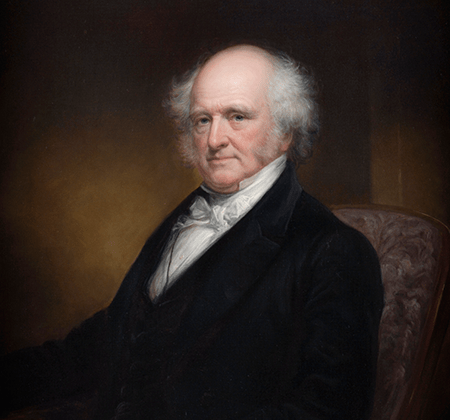
    Martin van Buren, the president after Jackson, was an elite Northerner from the upper class, but he was different from other Democratic-Republican elites in that he was not easily corruptible and believed in the original values of the party. Just like Jackson, van Buren recognized the corruption and nepotism of the elites in the party, and helped build a new political party, the Democratic Party, with Jackson to challenge the elites’ rule, then being appointed by Jackson to be Vice President after Calhoun’s resignation.

    Van Buren won the presidency after Jackson, and his presidency was, to put it frankly, pretty boring, at least compared to Jackson; he prevented the US from entering two wars and presided over a serious economic downturn known as the Panic of 1837, which was caused by higher interest rates initiated by Britain and higher foreign demand for American goods than there was supply, but only made worse by Jackson’s dissolving of the Second National Bank, which used to provide financial stability during downturns (Remember!). However, with the Democratic-Republicans dissolving in 1834, a new opposition party was formed against what seen as the tyrannical mob rule of Jackson’s Democrats, the Whigs, founded by former House Speaker Henry Clay, the guy who had denied Jackson his rightful victory in 1824 and received a death threat from him, who would circulate the false rumour that Jackson was responsible for the crisis, a misconception many historians still have today.

    William Henry Harrison/John Tyler Administrations

    Despite the fact that van Buren was mostly successful as president, multiple factors, including economic instability, false rumors of Democrat responsibility for that instability, and overall van Buren’s more timid and mild-mannered approach to governing cost him reelection to the Whig candidate, William Henry Harrison, who, just like Jackson, was a war hero, famous for his victory at the Battle of Tippecanoe in 1811, but who was ideologically more Whig and who would essentially act as a puppet for now-Senator Henry Clay. However, in a turn of events no one expected, Harrison died of pneumonia one month into office, with his Vice President John Tyler becoming the chief executive; Tyler was actually a Jackson sympathizer who managed to stall Clay’s Whig agenda for long enough until a Jackson loyalist named James K. Polk could retake the office.

    James K. Polk Administration

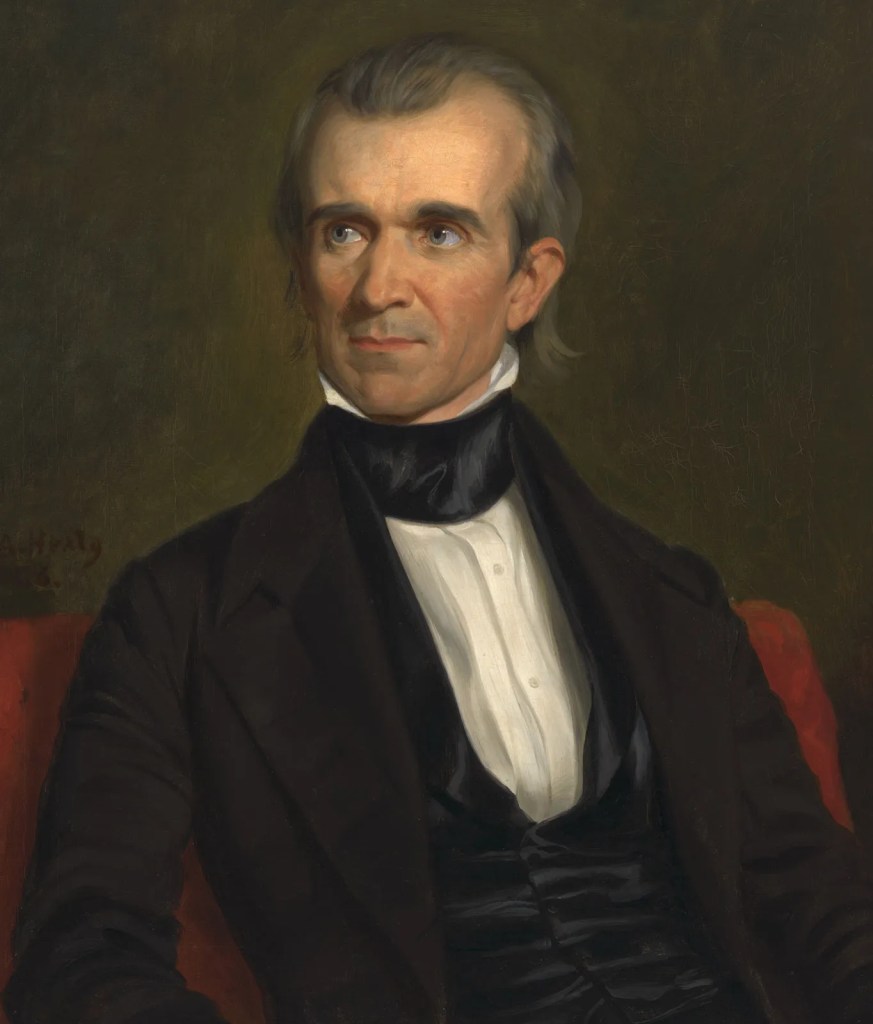
    Polk, a Southerner, was so close to Jackson, being seen as his apprentice, working with him to pass his agenda through Congress, and even adopting many of Jackson’s personal beliefs. After serving as Governor of Tennessee, Polk campaigned in 1844 on what he called his Four Great Measures, and as soon he was president, he set about implementing all four.

    1. Polk reestablished the Independent Treasury in 1846, a system where federal funds would be held in the government’s own vaults, reducing government reliance on banks and preventing speculation of federal funds but also limiting credit availability and hurting economic growth. 
    2. In the same year, Polk lowered tariffs from 32% to around 25%, which reduced protection for Northern manufacturers and increased reliance on foreign goods by reducing a barrier that had once promoted American self-sufficiency and allowed the government to collect extra revenue.
    3. Polk negotiated with Britain to divide the Oregon Territory along the 49th parallel, allowing for the creation of Oregon, Washington, Idaho, Montana, and Wyoming.
    4. Polk further expanded U.S. territory by annexing Texas in 1845 and going to war with Mexico that same year. By 1848, American troops had occupied Mexico City and negotiated the Treaty of Guadalupe Hidalgo. The states Polk had added from this treaty are Texas, California, Nevada, Utah, New Mexico, and parts of Colorado, Oklahoma, and Wyoming, all states which Polk hoped would practice slavery.

    Polk is the only president in American history to fulfill all of his promises, including a promise not to run a second term. After all, Jackson, Polk’s idol, had believed that presidents should only serve one term, despite the fact that he served two terms himself as president. The immense stress Polk took on as president would help contribute to his decision not to run for reelection. He would die shortly after leaving office.

    Polk’s shift towards the South and pro-slavery politics had made many Northern Democrats really mad. The Northern Democrats didn’t like slavery, but they believed in strict constitutionalism, and, as the Constitution delegated the slavery issue to the states, they tolerated it in the South, while they banned it in northern states, leading to a weird balance of free states and slave states. However, the Northern Democrats pursued policy that was favorable to their more industrial economy … like tariffs, and soon a divide was ensuing within the party.

    Uh oh … guess who’s back? Martin’s back. That’s right, former President Martin van Buren, a Northern Democrat, decided to re enter into politics and run on an independent anti-slavery platform, splitting the Democrat vote and handing the election to the Whig candidate Zachary Taylor. It’s important to note that van Buren did this purposely since the Whigs were openly opposed to slavery. However, the Whigs decided to let the issue slide for now so as to, you know, not start a civil war, a decision which would come back to haunt them in the future.

  • Madison & Monroe

    Now, although Jefferson was done with his 8 years in office, his party, the Democratic-Republicans would continue to be the party in power at this time, and the next three presidents that followed Jefferson were all Democratic-Republican: James Madison, James Monroe, and John Quincy Adams, continuing Jefferson’s agenda and policies. Madison and Monroe served two terms, while Adams barely even won his first one.

    James Madison Administration

    Madison had co-founded the Democratic-Republican Party with Jefferson and continued Jefferson’s policies, essentially 16 years of the same administration. However, after the War of 1812 ended, Madison realized that a strong central government, economy, and military was actually necessary to the nation’s security and desperately tried to promote Federalist policies in the last few years of his presidency, but he ultimately failed in doing so.

    However, this was not a big surprise to anyone. Madison used to be a Federalist, co-authoring the Federalist Papers with John Jay and Alexander Hamilton, and was much closer to Washington than Jefferson was. This foreshadowed what would occur later down the line.

    James Monroe Biography

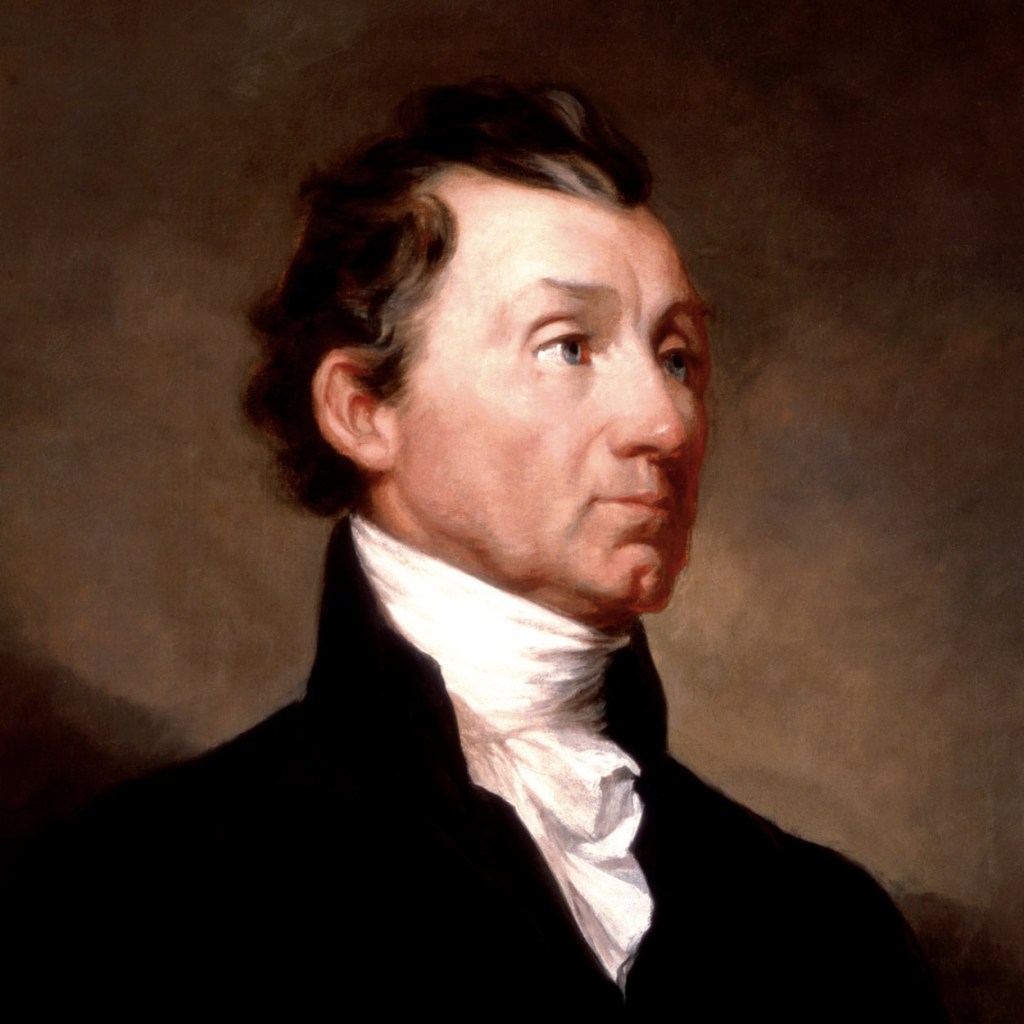
    Monroe was, in my opinion, a remarkable president. Yes, he’s part of Jefferson’s Democratic-Republican Era, but I think he should be discussed more than he is for his unique character and contributions to the Democratic-Republican party. 

    Monroe was born on April 28, 1758, in New York. His family had decent money, owning land and enslaved slaves, showing that they had a moderate level of wealth for the time. However, Monroe had to do a lot of laborious work throughout his early life.

    He spent 4 times as long working on his family farm than he did on his school. Then, his parents both died when he was just 16 years old. He dropped out of school and focused on farming full-time to support himself and his younger siblings. Remember, at 16 years old, Jefferson went off to college so that he could party with his peer students and his professors, so this was a massive difference in what both were doing.

    Monroe’s uncle felt sorry for him, and he wanted his nephew to succeed in life, so he lent him a hand and helped him go to college and get proper education. However, when the Revolutionary War broke out, Monroe decided to drop out of college to fight for his country.

    Unfortunately, Monroe would be struck by a musket ball in the shoulder that severed his artery. His life would be saved by a doctor who stopped the bleeding by pressing a finger into his wound. He would recover from his injuries and return to combat, serving during the Battle of Brandywine(September 1777) and the Battle of Germantown (October 1777) and was promoted to Captain for his bravery. After the war ended, Monroe got a new tutor. Guess who….

    If you guessed Thomas Jefferson, you’re right! Monroe was literally the representation for the perfect self-sufficient agrarian American that Jefferson idealized. He had a modest and disciplined lifestyle, was part of the independent yeoman farmer class Jefferson championed, and was known for his humble and unpretentious character. These were all qualities that the Democratic-Republicans admired in a leader.

    Monroe was smart, shown by his military strategy, diplomatic acumen, political vision, and legal & intellectual contributions. He was strong, famous for his perfect posture and tall height. He was independent and self-sufficient. His military service and belief in Democratic-Republican ideology proved he was loyal and dedicated. He was the perfect Democratic-Republican politician, and to Jefferson, the perfect man to carry on his legacy.

    However, there was a very big difference between Jefferson and Monroe. Jefferson was rich, famous, and powerful. He had never suffered from want, because he got everything he wanted. He spent days wanting to have a simpler life. On the other hand, Monroe was a labourer in his early life. He knew how horrible and boring it would be for him to do manual labor his whole life.

    Now, for a regular man, doing manual labor and farm work could’ve been enough. Had Monroe been a regular man, he would’ve gotten nowhere. He would’ve been stuck toiling the fields for the rest of his life. History would not have remembered him.

    But Monroe was not a regular man. He was not fine with farming. He was not fine with being forgotten. He wanted to do something, go somewhere, be someone. But that path to being the top would be rocky.

    Jefferson and Monroe would work together to advance Democratic-Republican ideals. Jefferson’s wealth and status launched Monroe, a common agrarian man, into politics. They were great friends and close neighbors. Monroe once wrote to Jefferson in a letter, “I feel that whatever I am at present in the opinion of others or whatever I may be in future has greatly arisen from your friendship.” Quite the dynamic duo, right?

    Monroe, however, faced several early political missteps before solidifying his legacy. He initially opposed the U.S. Constitution, which made him unpopular, lost a Congressional bid to the House of Representatives to James Madison, and strained U.S.-France relations during his time as Minister to France, which forced President Washington to recall him. Despite this, he stood by Jefferson’s side through it all, and did what Washington did, watched and learned, playing a pivotal role in negotiating the Louisiana Purchase, which doubled the size of the United States.

    James Monroe Administration

    Now, Monroe was very pragmatic in his policies as President, incorporating some policies from the Federalist Party into his own. This was partly because he recognized that the Federalists were no longer a prominent political party, and they would dissolve under his watch, essentially turning America into a one-party state.

    For example, Monroe implemented major infrastructure projects during his presidency. He expanded the Cumberland Road all the way into Ohio, which became the first major highway built by the federal government. In the wake of the War of 1812, he also emphasized national defense, authorizing projects such as military roads and fortifications along the Atlantic coast. He also encouraged the construction of the Erie Canal and began looking for more canal and waterway opportunities connecting major cities.

    Monroe’s shift towards infrastructure development, protective tariffs, and even a National Bank, all major Federalist policies, all led many prominent Federalists to either join the Democratic-Republican party or agree to cooperate with them in what became known as the “Era of Good Feelings.” Some of these Federalists include John Quincy Adams, Richard Rush, Harrison Gray Otis, Rufus King, and Daniel Webster. The loss of these figures ultimately drove the Federalist Party to complete extinction. 

    Now, Monroe did this on purpose. The Democratic-Republicans had dominated national politics for around 20 years by this point. He had an idealistic vision of Democratic-Republicans and Federalists working side-by-side to advance an agenda the whole country agreed with without political parties even existing. Of course, he only advocated for this because the country was pretty much completely entrenched in the ideology of the Democratic-Republicans by this point. And while it initially seemed Monroe’s vision would come true, it all soon came crashing down.

    In foreign policy, President Monroe issued the now-famous Monroe Doctrine, essentially warning European powers of future colonization attempts. This made clear that the US would support anti-imperial and republican movements across the Western Hemisphere. This would set the stage for American imperial dominance of the Western Hemisphere in the early 1900s that still exists today.

    However, just as it seemed that everything was going to be fine, and Monroe’s vision for the future of the nation was coming true, everything completely changed in the next election, shocking everyone.